

Hey there, fellow food lover! If you’ve ever stood staring into your pot, wondering “Will this ever cook?” or frantically tried to lift a whistling lid to save dinner, you’ve hit the classic pressure-cooking dilemma. As a chef who’s spent 15 years behind the stove – from bustling restaurant kitchens to teaching home cooks – I’ve seen countless friends and family wrestle with this exact question: Instant Pot or traditional pressure cooker? Let’s cut through the steam and get to the delicious details. I’ll give you the honest, practical lowdown based on decades of boiling, steaming, and pressure-cooking everything from tough chuck roasts to fluffy rice. Ready? Let’s simmer down and explore!
Why This “Instant Pot vs Pressure Cooker” Debate Matters
Pressure cooking isn’t new. It’s a superstar for making tough meats tender, cutting cooking time dramatically, and locking in flavor and nutrients. But the arrival of the Instant Pot (and its electric cousins) has sparked serious kitchen debates. Choosing the wrong one can mean frustration, wasted energy, or even a bad meal. I’ve watched beginners struggle with scary whistles and burnt food, while others marvel at one-touch meals. My goal? Help YOU make the right choice for your lifestyle, budget, and taste buds. Let’s dive in!
What Exactly is a Pressure Cooker? (The Classic Stovetop Hero)
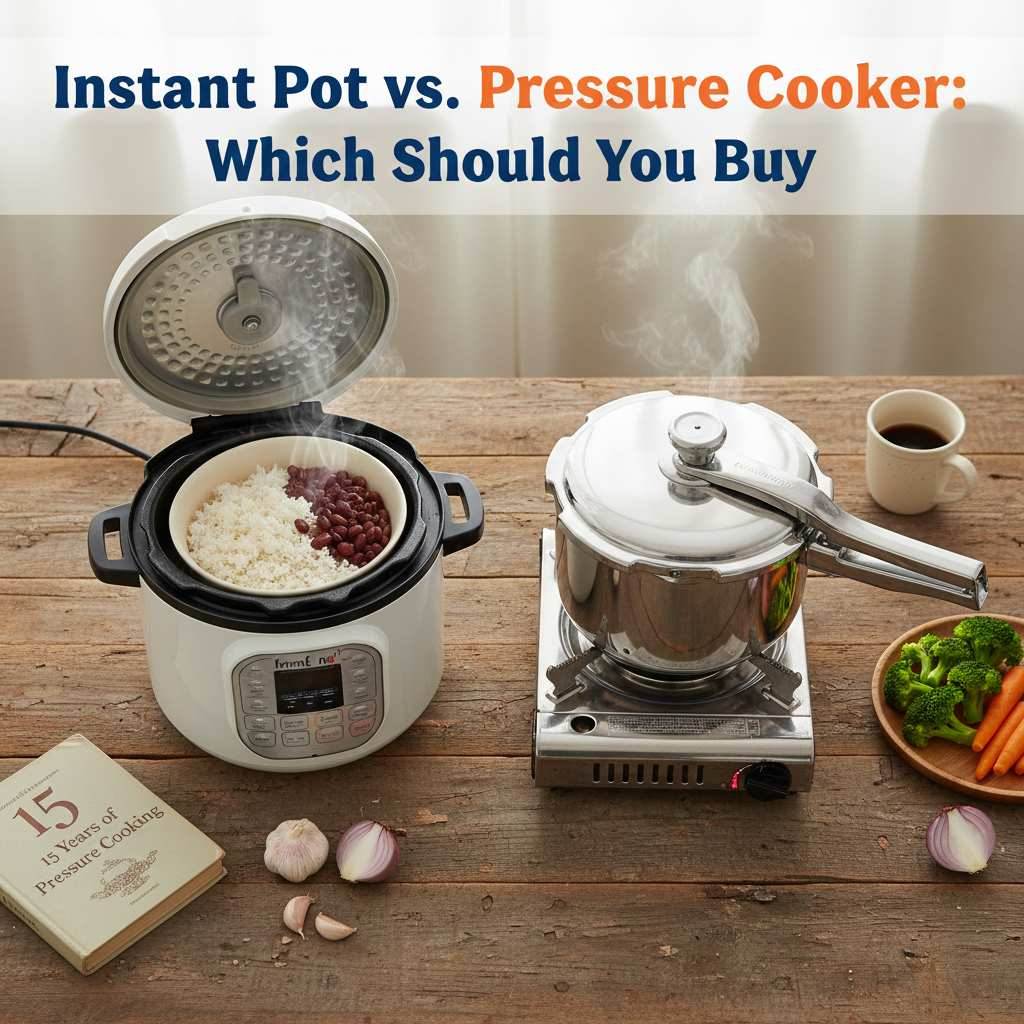
A traditional pressure cooker is a sealed pot that sits on your stove. When filled with food and liquid, you heat it. As the liquid boils, steam builds up inside, increasing the pressure and temperature far above a normal boil. This super-heated environment cooks food much faster – think tough beef becoming fall-apart tender in minutes, not hours!
Key Features of Stovetop Pressure Cookers:
- Stovetop Power: Relies entirely on your gas, electric, or induction cooktop.
- Manual Control: You control heat directly (usually with a knob). Lift the whistle to release steam manually.
- Simplicity: Generally fewer buttons or settings. It’s just “on” or “off.”
- Durability: Often made from strong stainless steel or aluminum. Well-made ones last decades.
- Whistle & Lock: A prominent safety whistle and a lid lock mechanism prevent accidental opening.
- Cooking Time: You set the heat and estimate cooking time based on the food. You watch and adjust.
The Good & The Bad (From My Kitchen):
- Pros:
- Incredibly Fast: Cuts cooking time by 50-70% for many dishes.
- Flavor Champion: Locks in moisture, aromas, and nutrients beautifully. Perfect stocks, stews, and grains.
- Budget-Friendly: Many excellent, durable models are affordable.
- Totally Versatile: Can also be used as a regular saucepan (though not for frying).
- No Electricity Needed: Works on any heat source, including campfires!
- Cons:
- Learning Curve: Requires attention. Burning food on the bottom is common for beginners. You must use enough liquid.
- Loud Whistle: Can be startling! (We’ve all jumped at that sudden toot!).
- Manual Release: You have to actively vent steam, which can spray hot liquid.
- Energy Use: Can be inefficient if you don’t preheat properly or use too much heat.
- Safety Vigilance: You’re responsible for monitoring heat and release.
What is an Instant Pot? (The Modern Electric Game-Changer)
The Instant Pot isn’t just another pressure cooker; it’s an electric pressure cooker that brought a whole new level of convenience and “set-it-and-forget-it” to the kitchen. It’s essentially a countertop appliance that combines several functions: pressure cooking, slow cooking, rice cooker, sauté, yogurt maker, and more – often in one sleek unit.
Key Features of the Instant Pot (and Similar Electric Models):
- Electric Power: Plugs into a standard outlet. No stovetop needed.
- Programmed Settings: One-touch buttons for common foods (soup, meat, rice, sauté, etc.). Just pick a mode and time.
- Automatic Pressure & Release: It builds pressure automatically and offers “manual,” “quick release,” or “natural release” options.
- Built-in Sauté: A stovetop-like function inside the inner pot for browning meat or sautéing veggies before pressure cooking.
- Multiple Functions: Often includes slow cooker, rice cooker, yogurt maker, steamer, warmer, etc.
- LCD Display: Shows time, mode, and pressure status clearly.
- Safer for Beginners: Many safety features prevent over-pressure, boiling dry, etc.
The Good & The Bad (My Honest Take After Years):
- Pros:
- Set-and-Forget Simplicity: Perfect for busy lives. Pop ingredients in, press a button, walk away. Dinner’s ready!
- Beginner-Friendly: Less risk of burning food due to “sauté” function and automatic pressure control.
- One-Pot Wonder: Browning, cooking, and even making rice/yogurt – all in one appliance. Huge time-saver.
- Quieter Operation: No loud whistle beeping (though it does signal when done).
- Consistent Results: Great for consistent cooking, especially grains and eggs.
- Space-Saving: Takes up less counter space than a full-sized stove.
- Cons:
- Higher Upfront Cost: Generally more expensive than a basic stovetop cooker.
- Larger Models Need Space: The bigger pots can be bulky on small counters.
- Less “Feel”: You can’t easily adjust heat mid-cook like on a stovetop. Less control for finicky dishes.
- Potential For Overcooking: Natural release can sometimes cook food too long if you forget.
- Limited High-Heat Tasks: Not ideal for dishes needing very high, fast heat (like searing steak perfectly).
A Quick History Lesson -Why Understanding Origins Helps!
Pressure cooking dates back over 300 years! The first device was invented by French physicist Denis Papin in the late 1600s. The principle? Trapping steam increases cooking temperature. Stovetop pressure cookers became household staples in the mid-20th century, revolutionizing home cooking. Fast forward to the 21st century: electric pressure cookers like the Instant Pot emerged, leveraging modern technology for unparalleled convenience and multi-functionality. Understanding this evolution shows why both types remain relevant: the stovetop model for its raw speed and control, the electric model for its ease and versatility.
Instant Pot vs Pressure Cooker: The Head-to-Head Breakdown
Now, let’s get into the core comparison. I’ll break it down into the factors that really matter when deciding which lands in your kitchen.
1. Cooking Method & Convenience: Electric vs. Stovetop
- Instant Pot (Electric):
- How it works: Heats water inside the pot electronically, generating steam to build pressure.
- Convenience: Ultimate “set it and forget it.” You load, press a button (e.g., “Soup” for 25 mins), and walk away. The timer counts down on the display. Release steam at the end with the push of a button.
- Best for: Busy schedules, single cooks, families wanting hands-off cooking, those who dislike babysitting a pot.
- Stovetop Pressure Cooker:
- How it works: Heat from your burner heats the pot itself, which then transfers heat to the contents, generating steam.
- Convenience: Requires active monitoring. You set the heat (usually medium-high), watch the whistle start, then time your cooking. You must be present to release steam manually (lifting the whistle). Great for multi-tasking while cooking.
- Best for: Experienced cooks who enjoy control, those using gas/electric induction stoves efficiently, multi-taskers who can manage the stovetop.
My Chef’s Take: If you value total hands-off convenience, the Instant Pot wins. If you like active cooking and control, the stovetop cooker is satisfying. I use both depending on the day!
2. Safety First: Which Keeps You Safer?
Safety is paramount, especially with high-pressure steam! Both types have robust safety features, but they approach it differently.
- Instant Pot (Electric):
- Automatic Features: Overhheat shutdown, over-pressure release, dry-burning protection (shuts off if no liquid), lid lock (won’t pressureize if lid isn’t sealed properly), automatic “keep warm” after cooking.
- Release Control: You choose “quick release” (manual button) or “natural release” (it vents slowly on its own). Less risk of accidental steam burns if you use quick release deliberately.
- Less Burn Notice: The “sauté” function helps prevent food from sticking/burning before pressure builds.
- Stovetop Pressure Cooker:
- Manual Features: Lid lock (prevents opening under pressure), prominent whistle (releases pressure when lifted), often a “safety plug” that vents if pressure gets too high.
- User Responsibility: Safety hinges entirely on the user. You must use enough liquid, avoid overfilling, monitor heat, and release steam correctly. Burning food on the bottom is a common hazard that can cause pressure issues or even rupture a safety valve if severe.
- Steam Exposure: Manually lifting the whistle to release pressure will spray hot steam. Always point away from yourself and others!
My Chef’s Take: The Instant Pot is objectively safer for beginners and absent-minded cooks due to its automatic protections. However, a experienced user is incredibly safe with a stovetop cooker – it’s about skill and respect for the process. Never force the whistle open!
3. Cooking Time & Speed: How Fast Can It Go?
Both dramatically reduce cooking time compared to conventional methods. But nuances matter.
- Instant Pot (Electric):
- Speed: Very fast pressurization (usually 5-10 mins). Cooking times are generally slightly longer than stovetop for the same dish because the heat transfer isn’t as direct. However, the total hands-off time (prep + cook + natural release) is often comparable or faster for many dishes.
- Consistency: Excellent for consistent doneness, especially grains, beans, and eggs.
- Stovetop Pressure Cooker:
- Speed: Faster pressurization (often under 5 mins on high heat). Heat transfers more directly, so cooking times are often slightly shorter for the actual cooking phase once pressure is reached. You can also adjust heat instantly.
- Flexibility: Easier to shorten or lengthen cooking slightly by adjusting heat or adding extra steam release time.
My Chef’s Take: For absolute fastest pressurization and cooking, the stovetop cooker has a slight edge if you’re actively managing it. However, the overall convenience and reduced stress of the Instant Pot often makes it feel faster in practice. For most home cooks, the difference is minimal.
4. Versatility & Extra Functions: One Device or Many?
This is where the Instant Pot really shines.
- Instant Pot (Electric):
- Multi-Functionality: Typically includes:
- Pressure Cooker: The core function.
- Sauté/Brown: Built-in electric stovetop element for browning meat, caramelizing onions, or stir-frying before pressure cooking (often with “More” or “Less” heat settings).
- Slow Cooker: A dedicated “Slow Cook” mode for low-and-slow dishes.
- Rice Cooker: Perfect for perfect rice, quinoa, couscous every time.
- Yogurt Maker: Makes thick, creamy yogurt (requires specific container).
- Steamer: A functional steamer basket is usually included.
- Warmer: Keeps food hot safely after cooking.
- One-Pot Meals: Easily brown, cook, and steam everything in one vessel.
- Multi-Functionality: Typically includes:
- Stovetop Pressure Cooker:
- Core Function: Exceptional pressure cooking.
- Secondary Use: Can often be used as a regular saucepan for boiling, steaming (with a basket), and sometimes even stewing/simmering. Some high-end models have a built-in sauté function (rare).
- Limitations: You still need separate appliances for slow cooking, rice cooking, sautéing large quantities, yogurt making, etc.
My Chef’s Take: If you crave versatility and want to minimize appliances, the Instant Pot is unbeatable. I love my Instant Pot for one-pot chicken and rice, yogurt, and quick stews. A stovetop cooker is the undisputed champion if your primary need is fast, high-impact pressure cooking and you already have other appliances for the rest.
5. Energy Efficiency: Saving Power & Money
Energy costs matter, especially if you cook multiple meals daily.
- Instant Pot (Electric):
- Efficiency: Generally more energy-efficient in the long run for multi-function use. It uses electricity directly to heat the inner pot. The “keep warm” function uses minimal power. Energy use scales well with larger models.
- Consideration: Your electricity rate determines actual cost.
- Stovetop Pressure Cooker:
- Efficiency: Efficiency depends heavily on your stove. Gas stoves transfer heat very efficiently. Electric coil stoves are less efficient. Induction stoves are highly efficient. The cooker itself loses heat through the sides.
- Heat Loss: Requires higher heat to build pressure quickly, using more energy initially. Keeping it on “warm” after cooking uses energy.
My Chef’s Take: An electric Instant Pot on an induction or efficient electric stove is very energy-efficient. A stovetop cooker on a gas burner is also efficient. Your actual savings depend on your appliance and utility rates. For primarily pressure cooking, the difference is often negligible.
6. Cleaning & Maintenance: Easy-Peasy or Headache?
Cleaning can make or break your choice.
- Instant Pot (Electric):
- Ease: Inner pot usually non-stick or stainless steel and dishwasher safe. Lid and sealing ring are also typically dishwasher safe. Exterior wipes clean easily.
- Consideration: The inner pot can get sticky if food burns during sautéing (though less common). Stainless steel pots need careful scrubbing if stains occur. Always ensure the sealing ring is clean and dry.
- Stovetop Pressure Cooker:
- Ease: Inner pot (often stainless steel) is usually dishwasher safe. The exterior and lid wipe clean. Whistles may need occasional cleaning.
- Consideration: Food can stick and burn during cooking, especially if you don’t stir or use enough liquid. Requires more vigilance to prevent messes. Stainless steel shows stains more easily.
My Chef’s Take: Both are relatively easy to clean, especially if dishwasher safe. The Instant Pot’s non-stick inner pot (if applicable) makes sautéing cleanup easier. Stovetop cookers require more attention during cooking to prevent burning, which makes cleanup harder if it happens.
7. Cost & Where to Buy: Budget-Friendly or Splurge?
Your budget is key.
- Instant Pot (Electric):
- Price Range: $60 – $300+. Basic 1.5L models start around $60-$80. Popular 3-6L models (like the Instant Pot Duo) range from $80-$180. High-end models with extra features (like air fryers) can exceed $200-$300.
- Value: Higher upfront cost, but potentially saves money long-term by replacing multiple appliances.
- Stovetop Pressure Cooker:
- Price Range: $20 – $150+. Excellent basic 3-5L models start around $25-$50. High-quality, durable stainless steel models (like Cuisinart or All-Clad) can reach $100-$150.
- Value: Extremely affordable entry point. Lasts a lifetime if cared for.
My Chef’s Take: If budget is tight, a basic stovetop cooker is a fantastic, affordable workhorse. If you value versatility and are willing to invest, the Instant Pot offers great long-term value. Shop reputable brands!
8. Durability & Lifespan: How Long Will It Last?
Well-cared-for pressure cookers are built to last.
- Instant Pot (Electric):
- Durability: Generally robust, but relies on electronics (heating element, sensors, buttons). Internal components can fail over many years (e.g., heating element, lid switch). High-quality brands tend to last 5-10+ years.
- Warranty: Often comes with a 1-year warranty; extended warranties available.
- Stovetop Pressure Cooker:
- Durability: Exceptional longevity. Well-made stainless steel or aluminum pots can last 20, 30, even 50+ years. The main wear points are the sealing ring/gasket and possibly the whistle mechanism. Metal construction is inherently sturdy.
- Warranty: Often shorter (1 year), but the appliance itself is built for decades.
My Chef’s Take: A stovetop pressure cooker is arguably the most durable kitchen appliance you can own. An Instant Pot is also durable but has electronic components that can eventually fail. Treat both well!
Instant Pot vs Pressure Cooker: Pros & Cons Summary
| Feature | Instant Pot (Electric Pressure Cooker) | Stovetop Pressure Cooker |
|---|---|---|
| Best For | Busy schedules, beginners, one-pot meals, multi-function needs | Experienced cooks, fast pressure cooking, budget, durability |
| Convenience | ★★★★★ Set-and-forget, programmed settings, hands-off | ★★★☆☆ Requires active monitoring, manual release |
| Safety | ★★★★★ Automatic features protect beginners | ★★★☆☆ Relies on user vigilance; steam burns possible |
| Cooking Speed | ★★★★☆ Fast pressurization, slightly longer cook times | ★★★★★ Slightly faster cooking once pressurized |
| Versatility | ★★★★★ Sauté, slow cook, rice cook, yogurt, steam, warm, pressure | ★★★☆☆ Primarily pressure cooks; can boil/steam |
| Energy Use | ★★★★☆ Efficient, especially electric induction | ★★★☆☆ Varies by stove type; can be efficient on gas/induct |
| Cleaning | ★★★★☆ Dishwasher-safe inner pot, easy wipe-down | ★★★☆☆ Dishwasher-safe pot, but burning can occur |
| Cost | ★★☆☆☆ $60-$300+ | ★★★★★ $20-$150+ |
| Durability | ★★★☆☆ 5-10+ years (electronics can fail) | ★★★★★ 20-50+ years (metal construction) |
| Control | ★★★☆☆ Less direct heat adjustment | ★★★★★ Direct heat control, easy adjustments |
Which One Should YOU Buy? Your Decision Guide
Choose the Instant Pot If:
- You Value Convenience Above All: You want to set it, forget it, and have dinner ready without babysitting the stove.
- You’re a Beginner or Cook Occasionally: The automated features and built-in sauté function take the guesswork out.
- You Want One Appliance to Do Many Jobs: Need to make rice perfectly, yogurt, slow-cook, sauté, and pressure cook? The Instant Pot covers it.
- Your Counter Space is Limited: You’d rather have one multi-tasker than several single-purpose pots.
- You Have an Electric Stove (Especially Induction): It pairs beautifully with efficient electric heating.
- You Hate Loud Kitchen Noises: No whistling beeps (just gentle dings!).
Choose a Stovetop Pressure Cooker If:
- You Love Fast, Hands-On Cooking: You enjoy being active in the kitchen and appreciate direct control over heat.
- Budget is a Primary Concern: You need an incredibly affordable, durable workhorse.
- You’re an Experienced Cook: You understand pressure cooking principles and want maximum speed and control.
- You Have a Gas Stove: Gas heat transfers beautifully to pressure cookers for incredibly fast pressurization.
- Durability & Lifespan are Top Priorities: You want an appliance that can literally last generations.
- You Primarily Need Fast Pressure Cooking: If 90% of your use is for speed-cooking stews, beans, or rice, the stovetop version excels.
My Personal Chef’s Take (After 15 Years):
“I use both daily! My trusty Le Creuset stovetop cooker is my go-to for massive batches of chili and beans – it’s fast, durable, and I love the control. But my Instant Pot? It’s my savior on chaotic weeknights. I sauté garlic and onions, pressure cook chicken and veggies for a quick stew, then let it natural release. It’s saved my sanity more times than I can count. They aren’t rivals; they’re teammates. Choose the one that fits YOUR rhythm and kitchen life best.”
How to Use Either Safely & Effectively (Quick Tips from 15 Years!)
For ANY Pressure Cooker (Instant Pot or Stovetop):
- ALWAYS USE SUFFICIENT LIQUID: Follow the manufacturer’s minimum (usually 1/2 cup to 1 cup water/stock per cup of food). Dry cooking = bad news.
- Don’t Overfill: Usually no more than 2/3 full to prevent messy releases or spills.
- Prep Food Properly: Chop veggies uniformly for even cooking. Brown meat before adding to the cooker if using a stovetop model (or use the sauté function on an Instant Pot).
- Let it Build Pressure Naturally: Avoid opening the vent prematurely. Let it reach pressure on its own.
- Release Steam Safely: For stovetop, lift the whistle away from yourself and others. For Instant Pot, use the quick release button deliberately when needed, pointing away.
- Let it Rest: After pressure releases, let residual steam escape naturally before opening – this helps seal integrity.
- Clean Regularly: Replace the sealing ring every 6-12 months. Clean the interior after every use to prevent sticky buildup.
- Follow Manufacturer Instructions: Always!
Final Thoughts: Your Kitchen, Your Choice
The Instant Pot vs Pressure Cooker debate isn’t about “which is better”; it’s about which fits YOU better. Both are incredible tools that save time, lock in flavor, and make tough cuts tender.
- Craving set-it-and-forget-it simplicity and multiple functions? The Instant Pot is your kitchen hero.
- Want legendary durability, fast speed under your control, and to save money? A stovetop pressure cooker is a timeless investment.
Whichever you choose, you’re adding a powerful ally to your culinary arsenal. As someone who’s cooked everything from Michelin-starred dishes to comforting family dinners, I can tell you: a pressure cooker – in any form – is one of the most rewarding tools you can own. It transforms cooking from a chore into a joy.
Happy cooking, friends! May your meals be fast, flavorful, and filled with love. Bon Appétit!
References & Further Reading:
- USDA Food Safety Guidelines for Pressure Cooking: For essential safety standards on minimum cooking temperatures and times to ensure food safety, especially for low-acid foods like beans and meat. https://www.fsis.usda.gov/food-safety/safe-food-handling-and-preparation/food-safety-basics/commercial-pressure-cookers
- Consumer Reports: Electric vs. Stovetop Pressure Cookers: An independent comparison reviewing performance, safety features, and user satisfaction across various models. https://www.consumerreports.org/cro/2023/01/electric-pressure-cookers-vs-stovetop-pressure-cookers/buying-guide/index.htm (Note: Subscription may be required for full access)
- Instant Pot Official Website – Product Specs & Features: For detailed information on the latest Instant Pot models, features, capacity, and technological advancements. https://www.instantpot.com/



[…] air fryers use “rapid air” technology. Here’s the […]