Imagine standing in your brand-new kitchen, eager to whip up that delicious recipe you’ve bookmarked. But when you open the drawers, you’re met with confusion: mismatched utensils, flimsy tools that wobble, or worse, empty shelves. It’s a common scenario for beginners, busy families, and aspiring home cooks. The truth? You don’t need a fortress of gadgets to cook brilliantly. What you do need are the right basic kitchen tools – the foundational pieces that transform cooking from frustrating to fun and flavorful.
After fifteen years of guiding home cooks, teaching cooking classes, and perfecting dishes in professional kitchens, I, Chef Margaret, am here to tell you: simplicity is strength. This isn’t about collecting every gadget under the sun. It’s about equipping your kitchen with essential, reliable tools that handle 95% of your everyday cooking. Forget the pressure of “must-have” gizmos you’ll rarely use. Let’s focus on the 15 basic kitchen tools every beginner truly needs to build confidence, save time, and create delicious meals for yourself and your loved ones. These tools are affordable, versatile, and will serve you well for years, whether you’re simmering a family supper or experimenting with a new recipe on a busy weeknight.
Why Investing in Basic Kitchen Tools Matters
Before we dive into the list, let’s talk why these tools are non-negotiable. As an experienced chef, I’ve seen countless beginners struggle with inadequate equipment. A dull knife makes chopping a chore; a flimsy spatula turns flipping eggs into a stressful ballet; ill-fitting measuring spoons lead to disastrous flavor imbalances. The right tools do more than just assist – they empower you.
- Build Confidence: When your tools work seamlessly, you feel capable. You’ll tackle recipes you previously avoided.
- Save Time & Money: No more frantic substitutions or ruined ingredients. Efficient tools streamline cooking.
- Enhance Flavor & Texture: Precise tools mean accurate measurements and proper techniques, leading to better results.
- Durability & Value: Investing in quality basic tools means fewer replacements and long-term savings.
- Reduce Stress: Cooking should be enjoyable, not a battle with poorly functioning equipment.
Think of these tools as your culinary foundation. They’re the reliable workhorses that allow creativity to flourish. Now, let’s explore the 15 essentials.
The 15 Essential Kitchen Tools Every Beginner Needs
1. Chef’s Knife (8-9 inches)
The undisputed king of the kitchen. This is your primary cutting tool for chopping, mincing, slicing, and dicing vegetables, herbs, meats, and fruits.
- Why It’s Essential: A sharp, well-balanced chef’s knife makes precise cuts quickly and safely. It’s indispensable for prep work.
- What to Look For: High-carbon steel (for sharpness and edge retention) with a comfortable, ergonomic handle. 8-9 inches is ideal for most tasks. Avoid cheap, brittle blades.
- Pro Tip (From My Kitchen): Always sharpen your knife regularly – a honing rod is a great supplement to professional sharpening. Store it safely in a block, drawer divider, or sheath to prevent accidents. Never put it on the counter edge or throw it down. A sharp knife is safer than a dull one!
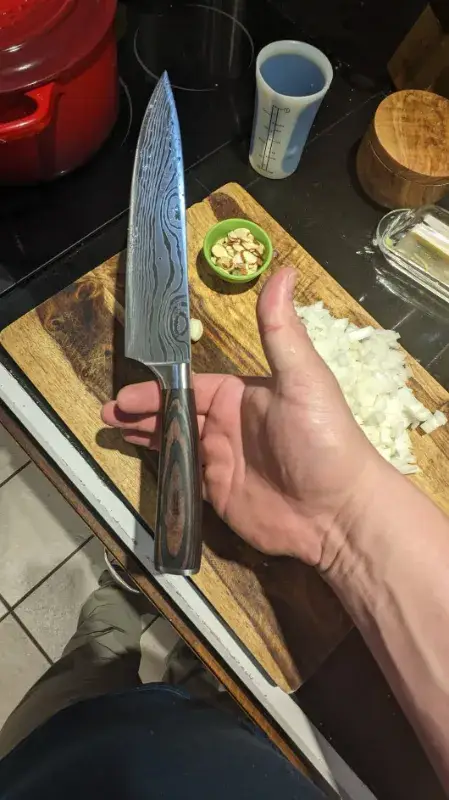

2. Cutting Board
Your staging area for all things chopped. It protects your countertops and keeps ingredients organized.
- Why It’s Essential: Prevents knife dulling on countertops, contains messes, and provides a clean, stable surface. Crucial for hygiene and efficiency.
- What to Look For: Solid wood (like maple, bamboo, or walnut) or heavy-duty plastic. Choose one large enough for serious prep (at least 18×12 inches). Wood boards should be topped with food-safe oil and used separately for raw meats vs. fruits/vegetables to avoid cross-contamination. Plastic boards must be very sturdy and dishwasher-safe if shared.
- Pro Tip: Have at least two: one dedicated to raw meats and one for produce/dairy. Clean thoroughly after every use. A well-maintained wooden board adds both function and beauty to your counter.
3. Non-Stick Fry Pan/Skillet (8-10 inches)
Your go-to for sautéing, frying, searing, and even baking eggs or pancakes.
- Why It’s Essential: Distributes heat evenly, allowing ingredients to cook quickly without burning. Non-stick surfaces make stirring and flipping effortless, especially for delicate items.
- What to Look For: Durable, heavy-gauge stainless steel or aluminum base with a high-quality non-stick coating (like Teflon, Ceramica, or Titanium). 8-10 inches is versatile for most tasks. Ensure it’s oven-safe (up to at least 350°F/175°C) if you plan to finish dishes in the oven.
- Pro Tip: Don’t overload it – cook in batches if needed. Avoid metal utensils that can scratch the coating. Use moderate heat; non-stick pans can degrade at very high temperatures. Season cast iron properly if you choose that route instead.
4. Non-Stick Saucepan (1-2 Quarts)
Perfect for melting butter, simmering sauces, melting chocolate, heating milk, or cooking small quantities of rice or pasta water.
- Why It’s Essential: Deep enough for liquid-based tasks but compact enough for controlled cooking. Essential for sauces, grays, and small-batch cooking.
- What to Look For: Similar material and coating to your fry pan. A 1-quart (approx. 1 liter) and a 2-quart (approx. 2 liter) size offer great versatility. Flat bottom is best for even induction cooktop heating.
- Pro Tip: Don’t let it boil dry! Always use a lid when simmering to trap steam and prevent sticking. A small saucepan is excellent for tasks requiring precise temperature control.
5. Baking Sheet (18×13 inches)
The workhorse for roasting vegetables, baking cookies, roasting chicken, or making sheet pan dinners.
- Why It’s Essential: Provides a large, flat surface for even baking and roasting. Essential for oven cooking staples.
- What to Look For: Heavy-gauge stainless steel or non-stick aluminum. Avoid flimsy, thin sheets that warp. A half-sheet size (18×13 inches) is the most versatile. Look for reinforced edges to prevent warping and rust.
- Pro Tip: Line it with quality silicone baking mats or reusable aluminum foil for easy cleanup. If using parchment, ensure it’s cut to fit snugly. Always leave space between items for air circulation.
6. Mixing Bowls (Set of 3-4 Sizes)
Crucial for combining ingredients, marinating, salads, and prepping components.
- Why It’s Essential: Allows you to mix without messing up your main cooking space. Different sizes accommodate everything from a single egg to a full cake batter.
- What to Look For: Stainless steel or durable, non-porous plastic (like Pyrex or acrylic). A set typically includes: small (1-1.5 cup), medium (2-3 cups), large (4-5 cups), and extra-large (6-8 cups). Stainless steel is preferred for durability and clarity (you see what’s happening).
- Pro Tip: Stainless steel bowls are excellent for cold ingredients (like butter for pastry) as they stay cool. Plastic bowls are great for whisking warm batters as they don’t get cold. Rubber spatulas are your best friend for getting every bit out.
7. Measuring Cups & Spoons (Set)
Accuracy is king in baking and crucial for balanced flavors in cooking.
- Why It’s Essential: Ensures recipes turn out correctly. Avoid guessing – precision leads to success.
- What to Look For: A complete set: Dry measuring cups (1/4 cup, 1/3 cup, 1/2 cup, 1 cup) and liquid measuring cups (1/4 cup, 1/3 cup, 1/2 cup, 1 cup, 2 cups). Include a full set of measuring spoons: 1/8 tsp, 1/4 tsp, 1/2 tsp, 1 tsp, 1 tbsp. Nested sets save space. Avoid using cooking utensils to measure – dedicated sets are accurate.
- Pro Tip: For dry ingredients, use the “scoop and level” method. For liquids, pour into a clear glass measuring cup on a level surface and read at eye level. Learn the difference: Measuring spoons are for both dry and liquid, but dedicated liquid cups (with a spout) are best for pouring.
8. Spatula (Silicone or Wood)
Your primary tool for flipping, folding, scraping, and lifting foods from pans.
- Why It’s Essential: Manages food without damaging non-stick surfaces. Vital for cooking eggs, burgers, fish, and folding delicate mixtures.
- What to Look For: Heavy-duty silicone (most versatile – won’t scratch anything, flexible, heat-resistant) or solid wood (great for searing steaks on high heat, but avoid in non-stick). A foot-long, flat edge is excellent for scraping pans. Get at least two: one for general use and one dedicated to sticky/pan-rescue tasks.
- Pro Tip: Silicone spatulas withstand very high temperatures (often over 400°F/200°C). They’re flexible enough to get under food and stiff enough to flip burgers effectively. Keep a favorite “pan scraper” spatula for tough stuck-on bits.
9. Wooden Spoon
The classic stirrer, masher, and server.
- Why It’s Essential: Gentle on non-stick coatings, won’t scratch stainless steel, distributes heat slowly (good for melting into mixtures), and is perfect for mashing potatoes or stirring thick sauces without chipping ceramics.
- What to Look For: Made from natural, dense wood (like maple or beech). Choose one with a thick, rounded bowl for stirring and a long handle. Avoid cheap, flimsy ones that splinter.
- Pro Tip: Its slow heat conduction is perfect for tasks like tempering eggs into sauces – it won’t shock them with sudden heat. It’s also unbeatable for mashing boiled potatoes by hand. Keep a few of different sizes.
10. Tongs (8-9 inches)
Perfect for turning meats, grilling, and serving salads or pasta.
- Why It’s Essential: Provides a secure grip on hot or slippery foods without crushing them. Essential for searing, grilling, and tossing salads.
- What to Look For: Stainless steel or silicone-coated steel. 8-9 inches long gives good leverage. Look for ones with a trigger mechanism to lock them closed for storage and a comfortable grip. “Pinch” tongs (with interlocking teeth) grip better than “cradle” tongs.
- Pro Tip: For grilling, choose tongs with teeth for better grip on fatty meats. For delicate fish or vegetables, smooth-faced tongs are better. Always have a pair specifically for raw meat to avoid cross-contamination.
11. Box Grater
Essential for zesting citrus, grating cheese, vegetables (like carrots), almonds, or creating fine breadcrumbs.
- Why It’s Essential: Adds flavor and texture efficiently. Zesting citrus brightens dishes instantly; grated cheese melts beautifully.
- What to Look For: A box grater with four sides: coarse, medium, fine, and micro-plane (very fine). Stainless steel or durable plastic body. Ensure the hoppers are deep enough to avoid spills.
- Pro Tip: Use the fine side for citrus zest – it’s potent! For cheese, the medium side is usually perfect for melting. Always grate away from yourself to avoid grating knuckles! A dedicated micro-plane zester is also a great addition for citrus.
12. Colander
For draining pasta, rinsing vegetables, or washing fruit.
- Why It’s Essential: Removes excess water quickly and efficiently. Essential for pasta cooking, rinsing grains, and preparing salads.
- What to Look For: Stainless steel or durable plastic. A medium bowl size (approx. 8-10 inches diameter) is versatile. Look for one with solid sides (to prevent splashing) and closely spaced holes for efficient draining. A footed design sits well in sinks.
- Pro Tip: Don’t overlook the importance of salt in the cooking water! Reserve a cup of pasta water before draining – it’s rich in starch and invaluable for finishing sauces. A colander with a fine mesh is excellent for rinsing delicate greens.
13. Whisk
For incorporating air into mixtures, blending ingredients smoothly, and whisking sauces.
- Why It’s Essential: Creates smooth batters, emulsifies vinaigrettes, and aerates meringues or egg whites. Essential for baking and sauce-making.
- What to Look For: A balloon whisk (large, bowl-shaped wires) is great for aerating. A small, durable wire whisk is perfect for sauces and small batches. Stainless steel wires are durable.
- Pro Tip: Use a large whisk for cake batters and meringues. Use a small whisk for sauces, gravies, and vinaigrettes. The shape matters: balloon whisks are best for volume; small whisks are better for control in small pans.
14. Saucepan with Lid (for Boiling/Simmering)
Essential for boiling potatoes, cooking pasta, making soups, or simmering stews.
- Why It’s Essential: Deep enough for generous quantities of liquid and food. A lid traps heat for efficient cooking and prevents boil-overs.
- What to Look For: Stainless steel or durable enamel. Size is key: a 3-4 quart saucepan is versatile for most boiling/simmering tasks. Ensure it’s deep enough so ingredients don’t bubble over. A well-fitting, tempered glass or stainless steel lid is ideal.
- Pro Tip: Salt your boiling water before adding pasta or potatoes! This seasons the food as it cooks. Always bring water to a rolling boil before adding food for consistent results. Use the lid to reduce cooking time and energy use.
15. Can Opener
Seems basic, but a reliable one makes opening canned goods safe and efficient.
- Why It’s Basic: You’ll inevitably use canned tomatoes, beans, soup, or vegetables. A bad opener is frustrating and unsafe.
- What to Look For: An automatic can opener (electric or manual pull-taps) is a huge timesaver and produces a cleaner edge. If you prefer manual, choose one with a smooth, easy-to-turn knob and a comfortable grip. Avoid cheap, flimsy pull-tab openers.
- Pro Tip: Always point the can opener away from yourself and others when opening. For manual openers, keep the can low and stable. Store opened cans in the fridge and use them quickly.
Caring for Your Basic Kitchen Tools: Longevity is Key
Your basic kitchen tools deserve proper care. This isn’t just about cleanliness; it’s about preserving their performance and safety:
- Knives: Wipe dry immediately after use. Store carefully (block, divider, sheath). Hone regularly. Professional sharpening when needed.
- Non-Stick Pans: Hand wash gently with warm, soapy water. Never scrub with steel wool. Avoid overheating empty. Never let water boil dry.
- Stainless Steel & Copper: Dishwashers are usually fine, but hand washing preserves shine and prevents etching. Dry thoroughly.
- Wooden Utensils: Hand wash gently. Do not soak. Dry thoroughly. Avoid putting in dishwashers unless specified. Oil occasionally if drying out.
- Plastic/Boiled Items: Follow manufacturer instructions. Many are dishwasher safe, but check for cracks or warping.
- General Hygiene: Wash hands thoroughly before handling tools and ingredients. Sanitize cutting boards and surfaces, especially after handling raw meats. Use separate tools for raw vs. ready-to-eat foods.
External Resource: For impeccable food safety guidelines beyond basic cleaning, the USDA offers comprehensive advice. Learn more about proper food handling and preventing cross-contamination from the USDA Food Safety website. It’s a vital read for every home cook.
Frequently Asked Questions (FAQs)
Q1: Can I start with cheaper versions of these basic kitchen tools? A: While budget-friendly options exist, investing a little more in quality basic kitchen tools pays off. A cheap knife dulls fast, a flimsy pan burns food, and poor measurements ruin recipes. Prioritize essential items like a good knife, sturdy pan, and accurate measuring set. Avoid the temptation of “all-in-one” gadgets that often do nothing well.
Q2: Do I really need both a frying pan and a saucepan? A: Yes, they serve distinct purposes. A fry pan (skillet) is shallower and perfect for frying, sautéing, and searing foods where you want good contact with the surface. A saucepan is deeper for boiling, simmering liquids, making sauces, and cooking foods that need to bubble gently. Having both gives you complete versatility.
Q3: Are silicone utensils really better than wood or metal? A: Silicone offers excellent heat resistance (often 400°F+/200°C+), won’t scratch delicate non-stick or stainless steel surfaces, and is flexible for scraping pans clean. They’re a fantastic modern choice. However, wood remains superb for searing meats on high heat and has a classic feel, while metal tongs or whisks are indispensable for certain tasks. A combination often works best.
Q4: How many mixing bowls do I actually need? A: A set of three is usually sufficient: small (1-1.5 cups) for whisking eggs or small sauces, medium (2-3 cups) for salads or sauces, and large (4-5+ cups) for cake batters, cookie dough, or large salads. An extra-large bowl (6-8 cups) is helpful for big batches of dough or casseroles. Stainless steel is durable and stays cool; glass is easy to see into.
Q5: Can I use my regular spoons as measuring spoons? A: No. Regular spoons vary significantly in size and are not calibrated for accuracy. This leads to inconsistent cooking results, especially in baking where precision is critical. Dedicated measuring spoons are inexpensive and essential for reliable recipes. Using regular spoons is a common beginner mistake that causes failure.
Conclusion: Build Your Foundation with Essential Tools
Equipping your kitchen with the right basic kitchen tools isn’t about extravagance; it’s about setting yourself up for everyday culinary success. These fifteen pieces form a robust, versatile foundation that handles breakfast, lunch, dinner, baking, and everything in between. They’re the reliable partners that will see you through countless meals, from simple weeknight suppers to more ambitious weekend projects.
Remember Chef Margaret’s golden rule: Quality over quantity. Don’t rush to buy every gadget under the sun. Focus on acquiring well-made versions of these essential tools. Take care of them, and they will serve you faithfully for years. Start with your chef’s knife, a good non-stick pan, and accurate measuring tools – these three alone will dramatically improve your results.
Your journey as a home cook begins not with complex recipes, but with the right tools in your hands. With these essentials, you’re empowered to explore, experiment, and most importantly, enjoy the process of creating delicious food in your own kitchen. Happy cooking – your future masterpieces await!
Pingback: Cambom Rotary Cheese Grater Review: The Chef’s Choice for Effortless Grating - KitchenFlavors