
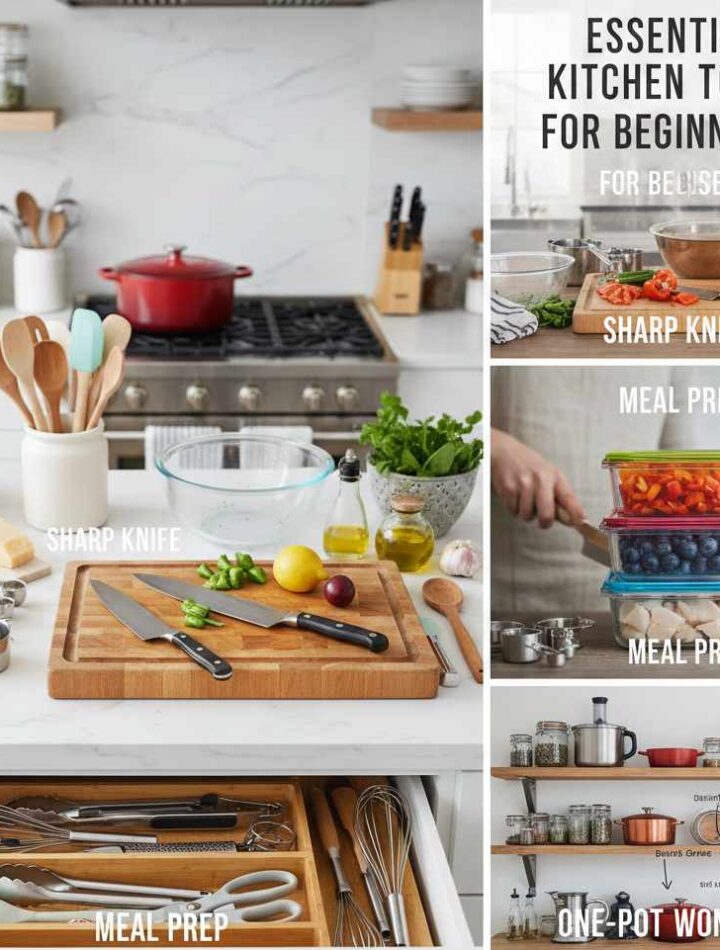
Must-Have Kitchen Tools for Beginners: Your Essential Kitchen Starter Kit
Setting up your first kitchen can feel overwhelming. I’ve been cooking professionally for over 15 years, and I remember standing in that kitchenware store, completely confused about what I actually needed versus what looked fancy.
Here’s the truth: you don’t need expensive gadgets or a drawer full of specialty tools to make delicious meals. What you need are quality basics that’ll last and make cooking enjoyable rather than frustrating.
In this guide, I’ll walk you through the essential kitchen tools every beginner needs, based on real cooking experience—not marketing hype.
Why the Right Tools Matter (More Than You Think)
Before we dive into the list, let me share something important. Using the wrong tools doesn’t just slow you down—it can actually make cooking dangerous and unpleasant.
I’ve seen beginners try to chop onions with dull knives (hello, accidents), flip pancakes with forks (messy disaster), and strain pasta without a colander (burned hands). The right tools make cooking safer, faster, and honestly, more fun.
When you have proper equipment, you’ll:
- Cook more efficiently and save time
- Enjoy the process instead of fighting with your tools
- Create better-tasting food with proper technique
- Feel more confident experimenting with new recipes
- Reduce kitchen accidents and frustration
How to Build Your Kitchen Toolkit on a Budget
You don’t need to buy everything at once. Start with the absolute essentials and add tools as you discover what you cook most often. I recommend spending more on items you’ll use daily (like knives and pans) and less on specialty tools.
Quality matters more than quantity. One great chef’s knife beats five mediocre ones. Trust me on this—I learned it the hard way.
The Essential Cutting Tools
1. Chef’s Knife (8-inch)
This is the most important tool in your kitchen. No exceptions.
An 8-inch chef’s knife handles about 90% of your cutting tasks—slicing vegetables, chopping herbs, cutting meat, and mincing garlic. It’s the workhorse you’ll reach for every single day.
What to look for: A knife that feels comfortable in your hand with good weight balance. The blade should be sharp (obviously) and made from high-carbon stainless steel for durability.
Price range: $30-$100 for a solid beginner knife. Brands like Victorinox, Mercer, and Wüsthof offer excellent options.
Pro tip: Hold the knife before buying. It should feel like an extension of your hand, not awkward or too heavy. Everyone’s hand size differs, so what works for your friend might not work for you.
2. Paring Knife (3-4 inch)
While your chef’s knife does the heavy lifting, a paring knife handles delicate work. Think peeling apples, deveining shrimp, trimming strawberries, or removing seeds from jalapeños.
What to look for: A short blade with a pointed tip and comfortable grip. Lightweight is good here.
Price range: $10-$30
Pro tip: Keep this knife sharp. A dull paring knife is more dangerous than a sharp one because you’ll apply more pressure and risk slipping.
3. Serrated Bread Knife
Ever tried cutting a fresh loaf of bread with a regular knife? It squishes the bread and creates a mess. A serrated knife solves this problem beautifully.
Beyond bread, this knife also excels at slicing tomatoes, cutting cakes, and tackling anything with a tough exterior and soft interior.
What to look for: At least 8-10 inches long with deep, pointed serrations.
Price range: $15-$40
4. Cutting Board (Two is Better)
You need a stable, spacious surface for all that cutting. I recommend having at least two cutting boards—one for raw meat and another for everything else. This prevents cross-contamination.
What to look for: Wood or plastic boards that are at least 12×18 inches. Bamboo is durable and eco-friendly. Plastic boards are dishwasher-safe.
Price range: $15-$50 each
Pro tip: Place a damp towel under your cutting board to keep it from sliding around. This simple trick prevents accidents and makes cutting much easier.
Essential Cooking Vessels
5. 10-12 Inch Skillet (Frying Pan)
If I could only have one pan, this would be it. A good skillet handles everything from scrambled eggs to seared chicken, sautéed vegetables to pan sauces.
What to look for: Stainless steel or cast iron. Non-stick is convenient but doesn’t last as long. An oven-safe handle is a huge bonus.
Price range: $40-$150
Pro tip: Learn to properly heat and use your pan. Most beginners don’t get their pans hot enough before adding food, which causes sticking.
6. Large Stockpot (8-12 quarts)
Perfect for making pasta, soup, stock, chili, or boiling vegetables. This is your go-to for anything with lots of liquid.
What to look for: Heavy bottom for even heating, sturdy handles, and a tight-fitting lid. Stainless steel is ideal.
Price range: $40-$100
7. Medium Saucepan (3-4 quarts)
This medium-sized pot is perfect for cooking rice, making oatmeal, heating soup, or preparing sauces. You’ll use it almost daily.
What to look for: Heavy bottom, comfortable handle, and a lid. Stainless steel with an aluminum or copper core distributes heat evenly.
Price range: $30-$80
8. Sheet Pan (Baking Sheet)
Also called a half-sheet pan, this flat metal pan is incredibly versatile. Roast vegetables, bake cookies, cook sheet pan dinners, or use it as a prep area.
What to look for: Heavy-gauge aluminum (18-gauge is professional quality) with a rim around all edges. Get at least two.
Price range: $15-$30 each
Pro tip: Line with parchment paper or foil for easy cleanup and to prevent food from sticking.
Essential Utensils and Hand Tools
9. Wooden Spoons (Set of 2-3)
These are gentle on your cookware, heat-resistant, and perfect for stirring everything from sauces to risotto. Unlike metal spoons, they won’t scratch your pans.
Price range: $10-$20 for a set
10. Silicone Spatula
Essential for scraping every last bit of batter from bowls, folding ingredients, and scrambling eggs. Heat-resistant silicone won’t melt or warp.
Price range: $8-$15
11. Metal Spatula (Fish Turner)
This thin, slotted spatula is perfect for flipping pancakes, burgers, fish, and eggs. The slots allow grease to drain away.
Price range: $10-$20
12. Tongs (9-12 inch)
Tongs are like extending your hands into the pan. They’re perfect for flipping meat, tossing salads, grabbing pasta, or turning vegetables.
What to look for: Stainless steel with scalloped edges for better grip. Spring-loaded with a lock for storage.
Price range: $10-$25
Pro tip: Before using tongs, click them together three times. It’s a chef thing—we all do it. Plus, it ensures they’re working properly.
13. Whisk
A wire whisk incorporates air, eliminates lumps, and blends ingredients smoothly. Essential for making scrambled eggs, whisking dressings, or mixing batters.
Price range: $8-$15
14. Can Opener
Seems obvious, but many beginners forget this one. Get a good manual can opener that’s comfortable to use.
Price range: $8-$20
15. Vegetable Peeler
Peeling potatoes, carrots, or apples becomes effortless with a sharp peeler. The Y-shaped peelers are my favorite—they’re fast and comfortable.
Price range: $5-$15
16. Box Grater
This four-sided grater handles everything from shredding cheese to zesting citrus to grating ginger. It’s way more versatile than a single-function tool.
Price range: $10-$25
Essential Measuring and Prep Tools
17. Measuring Cups (Dry and Liquid)
Cooking is flexible, but baking is science. Accurate measurements make the difference between success and failure.
What you need:
- A set of dry measuring cups (1 cup, 1/2 cup, 1/3 cup, 1/4 cup)
- A liquid measuring cup (preferably 2-cup and 4-cup sizes)
Price range: $15-$30 for both sets
Pro tip: Liquid and dry measuring cups are different. Use the right one for accurate results.
18. Measuring Spoons
For those smaller, precise measurements. You’ll use these for spices, baking powder, vanilla extract, and more.
Price range: $8-$15
19. Mixing Bowls (Set of 3-4)
You need bowls in various sizes for mixing, marinating, storing prepped ingredients, and serving. Stainless steel or glass are most versatile.
Price range: $20-$40 for a set
20. Colander
Draining pasta, rinsing vegetables, or washing berries—a colander makes these tasks simple and mess-free.
What to look for: Stable base, handles, and plenty of drainage holes. Stainless steel or plastic both work well.
Price range: $15-$30
Essential Gadgets and Extras
21. Kitchen Shears
These heavy-duty scissors handle tasks that are awkward with a knife. Think trimming fat from meat, cutting herbs, opening packages, or even butterflying chicken.
Price range: $15-$30
22. Instant-Read Thermometer
Stop guessing if your chicken is done. A thermometer takes the guesswork out of cooking meat safely and perfectly every time.
What to look for: Digital display, quick reading (under 10 seconds), and a wide temperature range.
Price range: $15-$40
Pro tip: This tool will improve your cooking more than almost anything else on this list. Seriously.
23. Oven Mitts or Kitchen Towels
Protect your hands from hot pans and pots. I prefer thick kitchen towels (you can do more with them), but oven mitts work great too.
Price range: $10-$25
24. Ladle
Essential for serving soup, stew, chili, or any liquid-heavy dish. Also great for portioning pancake batter.
Price range: $8-$15
25. Kitchen Timer
Don’t rely solely on your phone. A dedicated timer helps you track multiple things cooking at once and won’t get distracted by notifications.
Price range: $10-$20
Tools You Don’t Need (Yet)
Let me save you some money. Here are popular items you can skip as a beginner:
Garlic press: Just mince with your chef’s knife. It’s faster to clean.
Specialty appliances: Bread makers, pasta makers, egg cookers—wait until you know you’ll use them regularly.
Knife sets: You’re paying for knives you won’t use. Buy the three essential knives separately.
Too many gadgets: That avocado slicer? Your knife works fine. The strawberry huller? Use a paring knife.
Expensive non-stick pans: They lose their coating eventually. Start with one basic non-stick and invest in stainless steel or cast iron.
How to Care for Your Kitchen Tools
Quality tools last decades when properly maintained. Here’s how:
Knives:
- Hand wash and dry immediately (never put in the dishwasher)
- Use a knife sharpener or honing steel regularly
- Store in a knife block or on a magnetic strip
- Professional sharpening once or twice a year
Pots and Pans:
- Allow to cool before washing
- Use appropriate utensils (wood or silicone on non-stick)
- Clean stainless steel with Bar Keeper’s Friend for stubborn stains
- Season cast iron regularly
Cutting Boards:
- Wash with hot soapy water after each use
- Sanitize with diluted bleach solution weekly
- Oil wooden boards monthly with food-grade mineral oil
- Replace when deep grooves develop
General Rule: Read manufacturer care instructions. A few minutes of proper care extends tool life by years.
Building Your Kitchen: A Practical Timeline
Week 1 (Start Here):
- Chef’s knife
- Cutting board
- Large skillet
- Medium saucepan
- Wooden spoon
- Spatula
Month 1 (Add These):
- Paring knife
- Stockpot
- Tongs
- Measuring cups and spoons
- Mixing bowls
Month 2-3 (Nice to Have):
- Bread knife
- Sheet pans
- Whisk
- Colander
- Instant-read thermometer
Month 4+ (Complete Your Set):
- Everything else based on what you actually cook
This approach prevents overwhelm and wasted money on unused tools.
Where to Buy Kitchen Tools (Best Value)
Restaurant supply stores: Professional quality at lower prices. This is where chefs shop.
Online retailers: Amazon, WebstaurantStore, and Chef’s Warehouse offer good deals. Read reviews carefully.
Kitchen specialty stores: Higher prices but excellent quality and expert advice. Good for your most-used tools.
Discount stores: TJ Maxx, HomeGoods, and Marshalls often have quality brands at reduced prices.
Avoid: Super cheap sets from big box stores. They’re tempting but won’t last.
Common Beginner Mistakes (And How to Avoid Them)
Mistake 1: Buying complete sets Instead: Purchase individual quality pieces. You’ll save money and get better tools.
Mistake 2: Choosing cookware based on looks Instead: Focus on functionality and durability. That pretty pan might perform poorly.
Mistake 3: Not reading product dimensions Instead: Check sizes before buying. Many people order pans that are too small.
Mistake 4: Storing knives loose in drawers Instead: Use a knife block, magnetic strip, or blade guards. This protects both knives and fingers.
Mistake 5: Buying everything at once Instead: Start with essentials and add tools as you discover what you actually need.
Final Thoughts: Start Simple, Cook Often
Here’s what I wish someone had told me when I started: the best kitchen tool is practice. All these items are useless if they sit in your drawer.
Start with the basics, use them regularly, and you’ll naturally discover what else you need. Every cook’s kitchen looks different because we all have different favorite dishes and cooking styles.
The tools I’ve listed here will handle 95% of home cooking tasks. They’re based on my 15 years of professional cooking experience and what I actually reach for in my own kitchen at home.
Don’t let fancy gadgets distract you from learning fundamental cooking skills. A great chef can work wonders with just a knife and a pan. But a beginner with the right tools and willingness to learn? That’s where delicious food and wonderful memories begin.
Your Next Steps
Now that you know what you need, here’s what to do:
- Make a list of what you already own versus what you need
- Set a budget and prioritize the essentials (knives and pans first)
- Start shopping but don’t rush—quality over speed
- Learn proper techniques for using each tool (YouTube is great for this)
- Practice regularly and enjoy the journey
Remember, every great chef started exactly where you are now. The difference between you today and you in six months isn’t expensive equipment—it’s time spent cooking, learning, and enjoying the process.
Welcome to your cooking journey. Your kitchen is about to become your favorite room in the house.
Frequently Asked Questions
Q: Can I use the same cutting board for meat and vegetables? A: No, use separate boards to prevent cross-contamination. Many people use red for meat, green for vegetables.
Q: How often should I sharpen my knives? A: Hone them weekly with a honing steel and professionally sharpen them once or twice a year, depending on use.
Q: Are expensive knives worth it for beginners? A: Not necessarily. A $50 knife that you maintain properly will outperform a $200 knife that you neglect.
Q: What’s the difference between stainless steel and non-stick pans? A: Non-stick is easier for beginners but less durable. Stainless steel lasts forever, achieves better browning, but has a learning curve.
Q: Do I really need a stockpot if I have a saucepan? A: If you ever make pasta, boil corn, or make soup for multiple people, yes. The volume difference matters.
Q: Can I put my knives in the dishwasher? A: Never. The heat and harsh detergents damage blades and handles. Always hand wash knives.
Q: What’s the first tool I should upgrade when I have extra money? A: Your chef’s knife. It’s your most-used tool, so investing in quality here pays off daily.
Educational Resources:
- Culinary Institute of America
- Link: https://www.ciachef.edu/
- King Arthur Baking – Measuring Guide
- The Kitchn – Knife Sharpening Guide