Introduction:
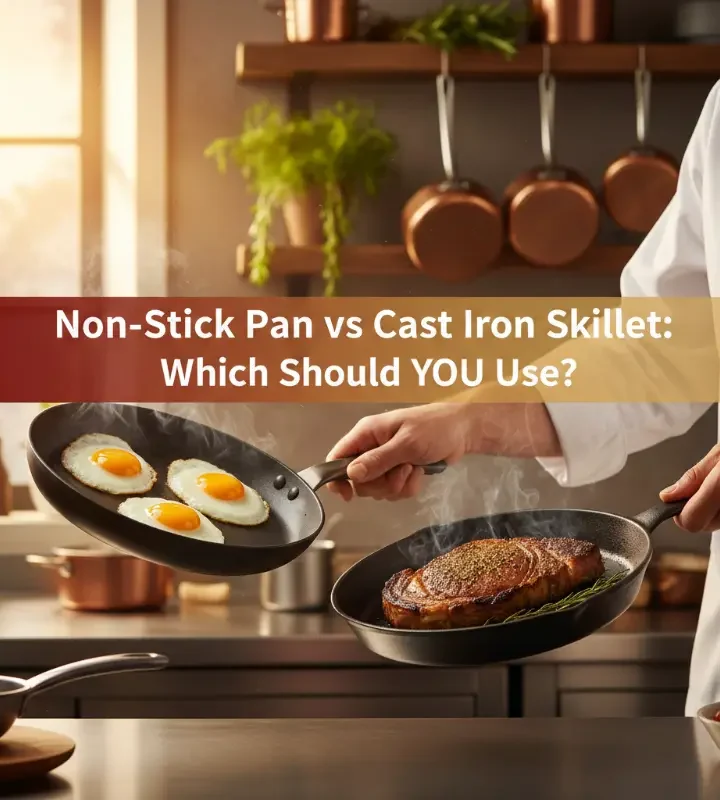
Hey there, fellow home chef! If you’ve ever stood staring at gleaming cookware in a store—or wrestled with a stubborn stuck-on egg—you’ve faced the big question: Non-stick pan vs cast iron skillet?
After 15 years of professional cooking—searing steaks in busy restaurants, flipping pancakes for hungry families, and experimenting with global dishes—I’ve used both types of pans extensively. Each has its superpowers and kryptonite.
This isn’t just another “which is better” rant. We’ll dive deep into real-world performance, maintenance truths, health facts, and when to use each based on your cooking habits. By the end, you’ll know exactly which pan (or pans!) deserves a spot in your kitchen.
What Exactly Are We Comparing?
Before we dissect, let’s define our contestants:
-
Non-Stick Pans:
Made from: Aluminum or stainless steel base coated with Teflon (non-stick), ceramic, or other releases.
Key Feature: Food slides off easily with minimal oil. Ideal for low-fat cooking and easy cleanup. -
Cast Iron Skillets:
Made from: Solid iron poured into molds.
Key Feature: Incredible heat retention and distribution. Perfect for high-heat searing, baking, and slow cooking. Requires seasoning and careful maintenance.
The Case for Non-Stick Pans: Pros and Cons
Pros of Non-Stick Pans
-
Effortless Cooking & Cleaning:
This is the biggest win. Eggs slide around like butter (no pun intended!), pancakes flip with a wrist flick, and cleanup is often just a quick rinse or wipe. Perfect after a long day when energy is low. -
Low-Fat Cooking Champion:
You can cook with much less oil. Spray a light coat, and go—great for health-conscious cooks or anyone watching calories. -
Lightweight & Versatile:
Easier to handle, especially for folks with wrist issues. Works on all stovetops (electric, gas, induction if labeled) and ovens up to usually 500°F (check your pan’s max temp). -
Budget-Friendly Entry Point:
Generally cheaper upfront than quality cast iron. Good for beginners or those wanting a “try before you commit” pan. -
Consistent Heat for Simmering/Sautéing:
Heats evenly enough for most everyday tasks like sautéing veggies or simmering sauces.
Cons of Non-Stick Pans
-
The Oil Trap:
You must use oil/butter! Using too little causes food to stick worse than sticky-backed tin foil. Too much negates health benefits. Finding the “Goldilocks” amount takes practice. -
Lifespan & Degradation:
The non-stick coating will wear down. Scraping with metal utensils, high heat (>375°F-400°F often), or sudden temperature changes can scratch or pit it. Most last 3-7 years with careful use. -
Not for High Heat or Heavy Duty:
Avoid prolonged high-heat searing, deep frying, or baking cornbread in them. They can release toxic fumes if overheated (more on safety later). -
Reaction to Acidic Foods:
Acidic foods (tomato sauce, vinegar) can break down the coating over time, leading to sticking and discoloration. -
Limited Flavor Development:
They don’t add flavor like a seasoned cast iron pan does to steaks or cornbread.
Wondering about safety? The FDA’s guide on non-stick cookware confirms that when used correctly (no overheating), modern non-stick pans are safe.
The Case for Cast Iron Skillets: Pros and Cons
Pros of Cast Iron Skillets
-
Unbeatable Heat Performance:
This is king. Cast iron heats slowly but holds and distributes heat like no other material. Sear a steak, and you get a perfect, crispy crust with an instant-seared center—every time. -
Flavor Builder:
Seasoned cast iron develops a natural, sticky polymer layer. This adds incredible flavor and prevents sticking without added oil. Steaks taste richer, cornbread crisper, and fried chicken crustier. -
Versatility Across Cooking Methods:
** Fry, sauté, roast, bake, grill!** From stovetop searing straight into the oven for pan-roasted chicken to baking cornbread in a skillet, cast iron does it all. -
Durability & Longevity:
A well-cared-for cast iron skillet can last generations. It’s an heirloom investment. Dents? Usually cosmetic. Warping? Rare with proper use. -
Energy Efficiency:
Because it retains heat so well, you use less energy keeping food cooking gently on low heat.
Cons of Cast Iron Skillets
-
Weight!
A 10-inch skillet can weigh 5-8 lbs. It’s a workout for your wrist, especially when lifting hot food. Not ideal if you have arthritis or limited strength. -
High Maintenance Demands:
Seasoning is non-negotiable. You must wash by hand (no soap!), dry instantly, and apply oil regularly. Skipping steps leads to rust and sticking. -
Slow Heating:
Takes longer to get up to high heat. Not ideal for quick stir-fries where you need instant high heat. -
Higher Upfront Cost:
Quality cast iron (like Lodge or pre-seasoned Le Creuset) costs more than a basic non-stick pan. -
Not for All Stovetops:
Never use on induction unless it’s specifically magnetized cast iron. Avoid putting hot cast iron on cold surfaces (like ceramic or granite countertops) to prevent thermal shock.
Need convincing? America’s Test Kitchen’s deep dive proves why seasoned cast iron outperforms non-stick for searing and baking.
Non-Stick Pan vs Cast Iron Skillet: Which Should YOU Use?
So, who wins? It depends entirely on YOUR cooking habits! Let’s break it down:
Factor 1: Your Most Common Cooking Tasks
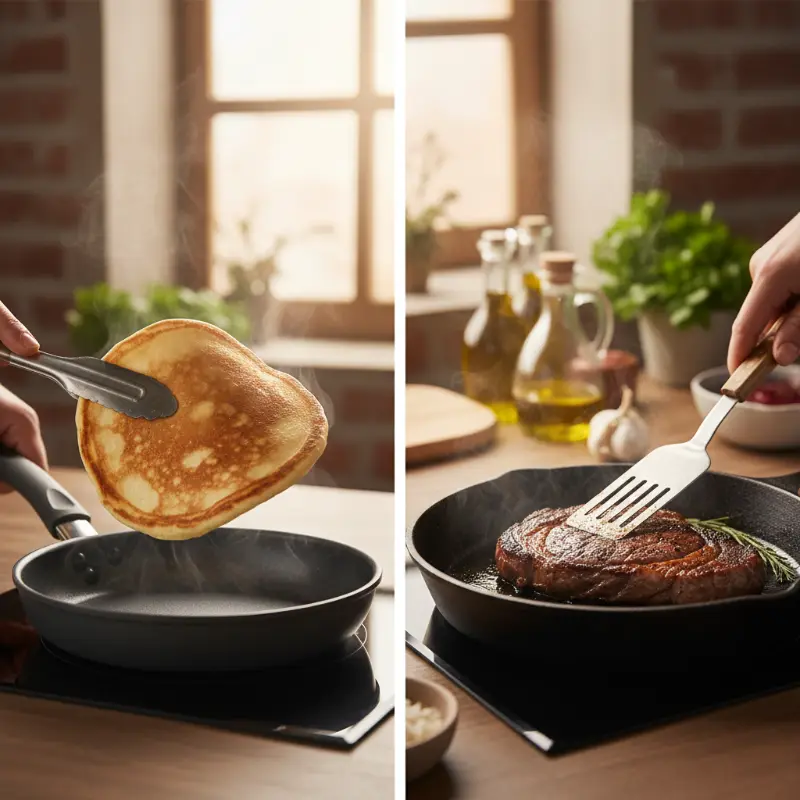
- Flipping Pancakes, Eggs, Sauteing Veggies? → Non-stick wins. Easy release, minimal oil, light weight.
- Searing Steaks, Pan-Roasting Chicken, Baking Cornbread? → Cast iron wins. Superior sear, even baking, flavor infusion.
- Low-Fat Frying/Simmering? → Non-stick wins.
- Slow Cooking, Grilling in the Oven? → Cast iron wins.
- Quick Stir-Fries on High Heat? → Non-stick wins (heats faster). Or a well-seasoned cast iron if you don’t mind the slower ramp-up.
Factor 2: Your Lifestyle & Energy
- Busy Schedule, Low Energy for Cleanup? → Non-stick wins. Quick wipe or rinse.
- ** Willing to Invest Time in Maintenance?** → Cast iron wins. The payoff is flavor and longevity.
- Limited Strength / Wrist Issues? → Non-stick wins. Lighter weight.
- Eco-Conscious / Want to Reduce Waste? → Cast iron wins. Lasts decades, reduces replacement needs.
Factor 3: Budget & Kitchen Space
- Tight Budget Right Now? → Non-stick wins (initially cheaper). But consider if you’ll regret replacing it soon.
- Have Space for Careful Storage? → Cast iron wins. Needs dry storage, often upright.
- Want an Heirloom Piece? → Cast iron wins.
Factor 4: Health & Nutrition Goals
- Minimizing Added Fats? → Non-stick wins (easier to cook with very little oil).
- Want Natural Flavor Without Added Oils? → Cast iron wins (uses its seasoned layer).
Factor 5: Heat Source
- Induction Cooktop? → Non-stick (induction-compatible) or Magnetized Cast Iron. Standard cast iron won’t work.
- Gas/Electric Coil? → Both work great.
- Open Flame (Campfire)? → Cast iron wins. Handles direct flame better.
The Ultimate Comparison Table: Non-Stick Pan vs Cast Iron Skillet
| Feature | Non-Stick Pan | Cast Iron Skillet |
|---|---|---|
| Best For | Everyday frying, low-fat cooking, easy cleanup | High-heat searing, baking, building flavor |
| Weight | Light to Moderate | Heavy (5-8 lbs for 10″) |
| Heat Distribution | Good (even enough for most tasks) | Excellent (superior retention & evenness) |
| Heat Retention | Low | Very High |
| Oil/Fat Required | Required (minimal, but essential) | Minimal (seasoned layer prevents sticking) |
| Cleanup | Easy (wipe, quick rinse) | Moderate (hand wash, dry instantly, oil) |
| Durability | Moderate (coating wears, 3-7 yrs) | Very High (lifetime with care) |
| Maintenance | Low (avoid metal, high heat) | High (seasoning, no soap, dry immediately) |
| Upfront Cost | Lower ($20-$50) | Higher ($30-$200+) |
| Lifespan | Shorter (replaced often) | Decades (heirloom potential) |
| Flavor Addition | None | Adds rich, smoky flavor |
| Best Cooking Methods | Frying, sautéing, simmering, low-medium baking | Searing, pan-roasting, frying, baking, grilling |
| Oven Safe Temp | Usually ≤ 500°F (check) | Typically 500°F-550°F+ |
| Induction Compatible? | Usually Yes (if labeled) | Only if magnetized |
| Risk of Toxins | Overheating can release fumes (rare, use low-medium heat) | None (when heated normally) |
| Best For Acidic Foods | Proceed with Caution (can break coating) | Excellent (seasoning handles acid well) |
| Best For Sticky Foods | Excellent (slides right off) | Good (seasoned layer prevents sticking) |
Making the Right Choice (and Keeping Options Open!)
You don’t have to choose ONE! Here’s a winning strategy:
- Start with a Quality Non-Stick Pan: Get a good mid-range one (e.g., Anolon, Caraway) for everyday tasks: eggs, pancakes, sautéing veggies, low-fat cooking. It’s your reliable workhorse.
- Invest in ONE Good Cast Iron Skillet: Choose a pre-seasoned 10-inch (ideal size) from Lodge, Le Creuset, or Staub. Use it for your most rewarding cooking: searing steaks, making cornbread, pan-roasting chicken, or even as a baking pan.
- Specialize Based on Recipes: Match the pan to the job. Don’t sear a steak in non-stick (it won’t get crispy enough); don’t fry a delicate omelet in cold-heavy cast iron (it’ll take too long to heat up).
Pro Tips from 15 Years:
- Season Your Cast Iron Religiously: Wash by hand, dry on a towel immediately, wipe with oil, and store upright. This is non-negotiable for performance and longevity. This guide from Cast Iron Care is fantastic.
- Never Overheat Non-Stick: Stick to temps below 400°F usually. Use lower heat for delicate items.
- Use the Right Oil in Cast Iron: Flaxseed or grapeseed oil for seasoning creates a great polymer layer. For cooking, avocado or olive oil (high smoke point) works well.
- Don’t Scrap Non-Stick Too Fast: If the coating is pitted but still functional, you can often rescue it for very low-heat tasks like reheating (though avoid acidic foods).
Conclusion: Your Kitchen, Your Decision
After 15 years of professional and home cooking, I can confidently say: There is no single “best” pan for everyone.
- Choose Non-Stick if: Easy cleanup, minimal oil use, light weight, everyday versatility, and a lower upfront cost are your top priorities. It’s fantastic for busy kitchens and health-focused cooking.
- Choose Cast Iron if: Building flavor, achieving perfect sears, baking cornbread in a skillet, cooking robust dishes, and investing in a lifelong, versatile tool appeal to you. It rewards patience and care with unparalleled results.
The real winner? Using the right tool for the job. Most serious home cooks benefit immensely from having both in their arsenal. The non-stick handles the quick, easy, low-mess tasks, while the cast iron delivers restaurant-quality sears, crispy cornbread, and that irresistible, smoky depth to your favorite dishes.
So, peek into your most-cooked recipes. Do you need speed and simplicity, or flavor and resilience? Your answer holds the key to the perfect pan for you.
Happy cooking! 🍳
FAQs: Non-Stick vs Cast Iron
Q: Can I use metal utensils in a non-stick pan?
A: Generally, avoid! Metal can scratch the coating. Use silicone, wood, or nylon utensils. If scratched, the pan’s lifespan diminishes.
Q: Will cast iron make my food taste metallic?
A: No, if properly seasoned. A good seasoning creates a polymer barrier. Rusty or poorly seasoned iron can impart a metallic taste—hence the strict care routine!
Q: Which pan is better for induction cooktops?
A: Non-stick pans labeled for induction are your safest bet. Some cast iron skillets are magnetized and work on induction, but they are heavier and less common.
Q: Can I put a non-stick pan in the oven?
A: Sometimes. Always check the manufacturer’s max temperature rating (usually around 500°F). Never put it under a broiler.
Q: Which is easier for beginners?
A: Non-stick is generally easier for beginners due to forgiving cooking and cleanup. However, learning cast iron care early builds great habits!
keywords: Non-Stick Pan vs Cast Iron Skillet