Hey there, fellow food lover! If you’ve ever found yourself hacking through carrots with a dull knife on a flimsy tray, or wrestling with a slippery plastic board that seems to attract every stain known to man, you know: the right cutting board isn’t just a pretty counter accessory. It’s the unsung hero of your kitchen, the foundation of safe, efficient, and enjoyable meal prep. After fifteen years of professional cooking – from bustling restaurant line-ups to teaching home cooks – I’ve seen countless blades dull prematurely and countless food safety mishaps stem from one simple oversight. Let’s dive deep into how you can confidently choose the right cutting board for your kitchen, ensuring safety, durability, and a smoother cooking experience every day.
Why Your Cutting Board Matters More Than You Think
Before we get to choices, let’s talk why this piece of wood, plastic, or composite deserves your attention:
- Food Safety First: Cross-contamination is a chef’s nightmare. A board that doesn’t clean thoroughly or holds onto bacteria from raw meats can turn a delicious dinner into a health hazard. The right board helps you segregate tasks (meat, veggies, bread) safely.
- Knife Longevity: A hard, stable surface protects your blades. A flimsy or soft board dulls knives rapidly, forcing you to sharpen more often (or worse, sawing ineffectively). Investing in a good board saves you money on knife sharpening or replacements!
- Efficiency & Comfort: A well-designed board provides a stable, comfortable workspace. You’ll chop faster, with less fatigue and fewer accidents. It makes prep time a joy, not a chore.
- Aesthetics & Value: Your cutting board is often front and center. A beautiful, durable piece elevates your kitchen and lasts for years, offering excellent value for money.
- Health & Hygiene: Beyond cross-contamination, the material itself matters. Some plastics can absorb odors and stains, while certain woods have natural antimicrobial properties. Finding a board that’s easy to clean and sanitize is crucial for a healthy kitchen.
In my early days, I used flimsy plastic boards that stained instantly and required constant replacement. Then I discovered the joy of a well-crafted maple block – it transformed my prep station. Let’s ensure you find your perfect match.
Cutting Board Materials: Pros, Cons, and Best Uses
The heart of how to choose the right cutting board for your kitchen lies in understanding the four main material types. Each has its place; the best choice depends on your specific needs, cooking style, and budget.
1. Wood: The Classic Choice (When Done Right)
Wooden boards are the gold standard in professional and many home kitchens for good reason – they feel wonderful, enhance knife performance, and often possess natural antimicrobial qualities. However, not all woods are created equal, and maintenance is key.
-
Popular & Recommended Woods:
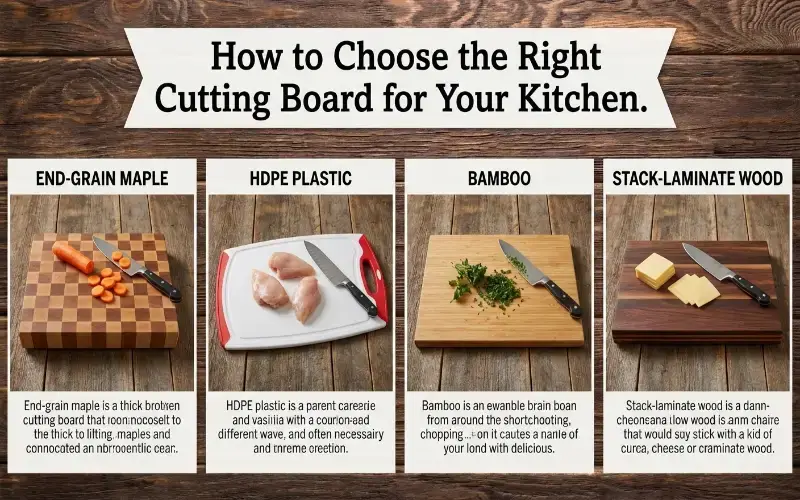
- End-Grain Maple (Hard Maple): This is my absolute top pick for most home cooks. Made from thin layers of hard maple stacked end-to-end, it’s incredibly durable, stable, knife-friendly, and has natural resistance to bacteria. It’s slightly softer than solid maple, making it easier on blades while still being firm. Best for: General use, large families, serious home chefs. (See our top recommendations below!)
- Bamboo: Dense, hard, and often beautiful. Bamboo has natural antimicrobial properties. However, it can be very hard on knives, potentially dulling them faster than softer woods unless you invest in high-quality blades. Also, untreated bamboo can absorb odors and stains. Best for: Those prioritizing natural materials and aesthetics, if you use high-carbon steel knives and maintain it meticulously.
- Walnut, Cherry, Olive, Beech: These offer beautiful aesthetics and decent performance. Walnut is harder than maple, olive is very hard and stable, beech is common in European styles. They require proper oiling to prevent drying and cracking. Best for: Adding visual appeal and variety; specific hardwoods like olive are great for durability.
- Spruce or Pine (Rarely Recommended): Softwoods are generally not recommended for regular cutting due to rapid knife dulling and potential for splinters. Avoid these for primary use.
-
Types of Wood Construction:
- End-Grain: (As above) The most durable and knife-friendly. Expensive but worth it.
- Stack-Laminate: Thin layers of wood glued together. More affordable than end-grain, but less durable and knife-friendly than solid hard maple. Can still be a good budget option.
- Full-Block (Solid Wood): A single thick piece of wood (like maple or walnut). Very stable and beautiful, but harder on knives than end-grain. Requires careful maintenance to prevent warping.
-
Pros:
- Superior knife glide and edge preservation (especially end-grain).
- Natural warmth and beauty.
- Often naturally antimicrobial (especially hard maple, bamboo).
- Generally easy to hand-wash and dry.
-
Cons:
- Requires diligent maintenance: Must be hand-washed (no dishwasher!), thoroughly dried, and regularly oiled (especially non-end-grain) to prevent drying, cracking, and bacterial growth.
- Not all woods are food-safe: Some treated woods or exotic species can contain harmful residues. Stick to reputable brands using food-grade woods.
- Can stain or absorb odors: Especially lighter woods or untreated bamboo. Proper care minimizes this.
- Higher upfront cost for quality end-grain boards.
2. Plastic: The Practical & Hygienic Option
Plastic boards (often made from high-density polyethylene – HDPE) are incredibly popular, especially for health-conscious users or those prioritizing ease of cleaning.
-
Pros:
- Ease of Cleaning: Most are dishwasher-safe! They clean easily, reducing cross-contamination risk if you have separate boards for raw meat, veggies, etc.
- Stain & Odor Resistant: Generally resistant to staining and absorbing odors better than wood.
- Affordable & Lightweight: Easier on knife edges than very hard materials like granite, though not as good as quality wood for knife longevity.
- Uniform Surface: Provides a consistent cutting surface.
-
Cons:
- Knife Dullness: While easier on blades than granite, many plastics still dull knives faster than quality wood. They can also develop tiny grooves (“trenches”) over time that harbor bacteria.
- Can Scratch Easily: Especially lighter-colored plastics, showing knife marks readily.
- Aesthetic: Often looks less appealing than wood to many users.
- Potential for Microplastics: Over time and heavy use, very fine particles can flake off – though research on health impacts is still evolving. For the latest research summaries on plastic cutting boards and potential microplastic concerns, reputable sources like the Environmental Working Group (EWG) often provide updates.
- Less “Feel”: Many chefs find them less satisfying to use than wood.
3. Composite & Bamboo-Filled Boards
These aim to combine the best of wood and plastic, or offer a specific aesthetic.
-
Wood-Plastic Composites: Usually made from wood fibers and plastic binding. Can be attractive and durable, often stain-resistant. However, knife performance varies wildly – some are very hard on blades, others softer. Maintenance often leans towards plastic (dishwasher safe). Treat with skepticism; quality can be inconsistent.
-
Bamboo-Filled Composite: Often bamboo particles in a plastic or resin matrix. Can look nice and be durable/stain-resistant. Similar knife performance issues as wood-plastic composites. Again, quality varies.
-
Pros:
- Often stain and odor resistant.
- Can be dishwasher safe.
- Potentially attractive aesthetics.
-
Cons:
- Inconsistent knife performance: Can be too hard or too soft.
- Durability concerns: Some composites can chip or degrade over time.
- Limited long-term testing: Less data on longevity and bacterial resistance compared to wood or pure plastic.
- When evaluating specific composite brands, consumer review sites like Wirecutter by NYT provide rigorous, independent testing and comparisons, helping you cut through marketing hype.
4. Glass or Stone: The Heavy & Specialized Option
-
Glass: Beautiful and easy to clean, but extremely hard on knives. Will dull blades rapidly unless you have very hard steel knives and sharpen frequently. Also prone to chipping around the edges. Primarily decorative or for very light use.
-
Stone (Granite, Marble): Extremely hard and durable, but the worst possible choice for knives. Will dull edges incredibly fast, requiring constant sharpening. Heavy and expensive. Only consider if you never plan to cut on it (use as a serving tray).
-
Pros:
- Easy to clean and sanitize (especially glass).
- Very durable (stone).
- Aesthetic appeal.
-
Cons:
- Disastrous for knives: Rapid, excessive dulling.
- Glass is fragile; stone is heavy and expensive.
- Not practical for regular use.
Verdict: Avoid glass and stone for cutting. They are poor value and will frustrate you and damage your knives. Stick to wood or plastic for serious cutting.
How to Choose the Right Cutting Board for Your Kitchen: Your Decision Roadmap
Now we arrive at the core: how to choose the right cutting board for your kitchen. Consider these critical factors together – don’t just focus on one!
1. Assess Your Primary Use & Volume
- Casual Home Cook (Small Families): A mid-sized (18×12 inch) stack-laminate wood board or a good-quality HDPE plastic board works well. Focus on ease of cleaning and moderate durability.
- Busy Families / Entertaining: Opt for a large end-grain maple board (24×16 inch is common). The durability handles heavy use, and the size allows prepping large roasts, platters, or multiple dishes simultaneously. Separate smaller boards for specific tasks (bread, cheese) if needed.
- Serious Home Chef / Foodie: Invest in one or two premium end-grain maple boards – one large for general/meat prep, one smaller for delicate tasks or bread. Consider adding a dedicated plastic board exclusively for raw meat to eliminate any cross-contamination risk if you’re ultra-cautious.
- Health-Conscious / Allergy Concerns: Plastic boards (HDPE) are often the safest choice here, especially if you need strict separation (e.g., handling allergens like nuts or dairy). Ensure rigorous cleaning protocols regardless of material.
2. Prioritize Material & Durability Needs
- Knife Care is Paramount: If you invest in good knives, protect them! End-grain maple is the gold standard for knife longevity. Avoid very hard materials (bamboo, some composites, stone, glass) unless you sharpen constantly.
- Hygiene is Non-Negotiable: All boards require proper care. Wood needs hand-washing, thorough drying, and oiling. Plastic needs thorough washing (dishwasher is ideal). Never use the same board for raw meat and ready-to-eat foods without meticulous cleaning and drying in between. Consider having dedicated boards for different food types.
- Aesthetics Matter: Choose a material and wood species you love looking at. A beautiful board makes prep more enjoyable! Maple, walnut, and cherry offer classic elegance. Bamboo offers a modern, natural look.
3. Size & Shape: Fit Your Space & Workflow
- Size Matters: Bigger isn’t always better, but for frequent cooking, a larger surface allows more room to work without crowding. Measure your counter space! Common sizes:
- Small: 12×8″ – 16×10″ (Bread, cheese, small tasks)
- Medium: 18×12″ – 20×14″ (General home use, most families)
- Large: 24×16″ – 30×18″ (Big meals, roasts, Entertaining)
- Thickness & Stability: Thicker boards (at least 1.5 inches for end-grain, 1 inch+ for solid wood) resist warping and provide a solid, stable cutting surface. Thin boards flex, making cutting awkward and unsafe.
- Edge Design: Rounded edges are safer and less likely to chip. Bevelled edges add aesthetics. Consider a juice groove around the edge if you process a lot of liquids (helps contain messes).
- Footed Boards: Some larger end-grain boards have rubber or wooden feet underneath. These prevent slipping and keep the board off the counter, aiding in drying and reducing bacterial growth under the board – a smart feature!
4. Maintenance Requirements & Lifestyle
- Do You Have Time for Diligent Care? Beautiful wood boards (especially non-end-grain) need regular oiling (every few weeks/months) and careful hand-washing/drying. If dishwashers are your best friend and you lack time for meticulous care, plastic (HDPE) is often the most practical choice.
- Dishwasher Safe? Most plastics are. Never put wood cutting boards in the dishwasher – the heat and water will destroy them, causing warping, cracking, and compromising the wood’s integrity. Hand-wash only with warm, soapy water, scrub gently, and dry immediately and thoroughly.
- Storage: How will you store it? On a stand, hanging, or lying flat? Ensure your storage method keeps it dry and prevents warping. Avoid stuffing it away in damp drawers.
5. Budget: Smart Investment vs. Everyday Use
- Entry-Level (Under $30): Budget stack-laminate wood boards or basic HDPE plastic. Good for occasional use or as a secondary board. Expect moderate durability and knife performance.
- Mid-Range ($30-$100): Quality stack-laminate wood, smaller end-grain boards, or premium HDPE plastic. Excellent value for most home cooks. Good durability and knife feel.
- Premium ($100+): Large, full-size end-grain maple boards (often 2+ inches thick). These are lifetime investments for serious cooks. They feel incredible, protect knives beautifully, and last decades with care.
Margaret’s Top Recommendations: The Best Cutting Boards for Different Kitchens
Based on my kitchen battles and client feedback, here are my tried-and-true picks across categories (affordability and links to reputable testers):
- For Most Home Cooks (Value & Performance): End-Grain Maple Board (Medium/Large) – Brands like John Boos, Epicurean, or Wooden CutCo offer excellent quality. Look for thick (1.75″+), well-constructed end-grain maple. They dominate the market for good reason. For comprehensive, independent testing and top picks from a trusted source, The Spruce Eats regularly updates their roundup.
- For Busy Families / Entertaining: Large End-Grain Maple Board – Go big! John Boos Block or a similar large, sturdy end-grain board provides the space and durability for holiday meals and weekly prep. Pair with a smaller plastic board dedicated to raw meat for ultimate safety if needed.
- For Health-Conscious Users / Easy Cleanup: High-Quality HDPE Plastic Board – Brands like Edge or Rubbermaid Commercial Grade offer durable, stain-resistant, dishwasher-safe options. Opt for thick boards (at least 1/2 inch) for better stability and knife performance. Avoid flimsy, thin plastic boards.
- For the Budget-Conscious Beginner: Solid Maple Board (Stack-Laminate) – Brands like Ironwood or Hoggs offer decent, affordable solid maple boards. They won’t last as long as end-grain but are a good stepping stone. Treat them as you would any wood board (hand-wash, oil, dry well).
- For Aesthetic Appeal & Moderate Use: Walnut or Cherry Wood Board – Brands like Teakhaus or Wooden CutCo offer beautifully finished walnut or cherry boards. They’re harder on knives than maple but stunning. Ensure you commit to regular oiling.
Key Tip: Always buy from reputable manufacturers or established retailers. Beware of very cheap, unknown brands – they may use low-quality woods, poor joinery, or even unsafe finishes.
Mastering Care: Keeping Your Board (and Knives) Happy
Regardless of material, diligent care is non-negotiable for hygiene, longevity, and performance:
For ALL Boards (Wood & Plastic)
- Immediate Cleaning: Don’t let food sit! Wash right after use.
- Proper Washing:
- Wood (End-Grain & Solid): Hand-wash ONLY with warm, soapy water. Use a soft brush or cloth, not an abrasive sponge. Scrub gently, especially around seams and grooves. Rinse thoroughly. Never soak!
- Plastic (HDPE): Dishwasher is ideal! Use a warm cycle and a gentle detergent. If hand-washing, use warm, soapy water and a soft brush. Rinse well.
- Avoid Bleach & Harsh Chemicals: These damage wood and can alter plastic. Use food-safe cleaners only. For deep disinfection of wood boards (e.g., after raw meat prep), some chefs use a solution of 1 tablespoon of chlorine bleach per quart of water rinsed off immediately and thoroughly – only as a last resort and followed by exhaustive rinsing and drying. Consult your board manufacturer.
- Thorough Drying: This is CRITICAL!
- Wood: Dry immediately after washing. Place on a towel, pat dry, and allow to air-dry upright on its feet or upside down on a rack away from direct heat or sunlight. Check daily. Oil regularly as per manufacturer instructions (usually every few weeks to months, more often in humid climates). Never put a wood board in the dishwasher or microwave.
- Plastic: Air-dry upright or invert on a rack. Dishwasher drying is fine.
Specific Wood Care
- Oiling: Use a high-quality food-safe mineral oil or a dedicated wood board conditioner/oiler. Apply thinly, let sit (often 24 hours), then wipe off excess. Follow the product instructions. This seals the wood, prevents drying/cracking, and helps reduce bacterial growth.
- Avoid Heat & Sunlight: Direct heat (dishwasher, oven, sunlight) kills wood fibers, causing discoloration, drying, and cracking.
Cross-Contamination Prevention: The Golden Rule
- Never use the same board for raw meat/poultry and ready-to-eat foods (like veggies, bread, cheese) without thorough cleaning and drying.
- Best Practice: Have at least two boards:
- Board 1: For raw meat, poultry, fish. Clean meticulously after every use. (Many prefer a dedicated plastic board here for easy disinfection).
- Board 2: For vegetables, fruits, bread, cheese, prepared dishes. Keep separate.
- Consider Color Coding: Some brands offer differently colored plastic boards explicitly for meat vs. veg prep – a simple, effective visual cue.
Common Mistakes & How to Avoid Them (Learn From My Kitchen Wars!)
- Using One Board for Everything (Especially Raw Meat & Veggies): This is the #1 food safety sin! Always segregate. A quick rinse isn’t enough to kill all harmful bacteria.
- Putting Wood Boards in the Dishwasher: This will ruin any wood board. The heat and water cause irreversible warping, cracking, and damage to the finish/oil. Hand-wash only.
- Not Drying Wood Boards Thoroughly: Moisture trapped under the board or within the wood leads to bacterial growth, unpleasant odors, staining, and eventual rot or disintegration. Dry on the bottom as well!
- Skipping Regular Oilings (for Wood): Neglecting oiling causes wood to dry out, crack, become rough, and harbor bacteria in the cracks. Treat oiling as part of your kitchen routine.
- Choosing the Wrong Material for Your Needs: Buying a beautiful but incredibly hard bamboo board if you have good knives you love will lead to frustration and dull blades. Match the board to your knife steel and usage.
- Ignoring Knife Sharpness: A dull knife strains any board and is dangerous. Use the right board in conjunction with regular sharpening. A sharp knife glides easily on a good board.
- Using a Flimsy or Soft Board: Thin plastic or soft wood boards flex under pressure, making cutting awkward, increasing the risk of slips/accidents, and accelerating knife dullness.
- Not Storing Properly: Leaving a board face-down on a wet counter or stuffing it in a damp drawer causes warping and moisture buildup. Store upright or on a stand to allow airflow.
Conclusion: Your Path to a Safer, Smoother Prep Experience
Choosing the perfect cutting board isn’t about finding the most exotic wood or the flashiest design; it’s about finding the right tool that aligns with your cooking style, prioritizes safety, and fits seamlessly into your daily routine. Take the time to choose the right cutting board for your kitchen – it’s an investment that pays dividends in knife longevity, food safety, cooking efficiency, and pure kitchen enjoyment for years to come.
Remember the golden rules: match material to use, prioritize hygiene through segregation and thorough cleaning/drying, protect your knives with a stable, appropriate surface, and commit to proper maintenance. Whether you land on a stunning end-grain maple block for your Sunday roasts or a reliable plastic board for quick weeknight dinners, the right choice will transform your time behind the counter from a chore into a genuine pleasure. Happy prepping, friends!
People Also Ask (FAQs)
-
Q: Can I use any plastic cutting board for raw meat?
A: Only use high-density polyethylene (HDPE) boards specifically designed for food prep. Avoid cheap, unknown plastics. Always clean thoroughly and consider dedicated boards for meat vs. veggies. -
Q: How often should I oil my end-grain maple board?
A: Typically every 4-6 weeks, or when the wood feels dry to the touch. Climate and usage affect this – oil more frequently in dry winter months. -
Q: Are bamboo cutting boards safe and good for knives?
A: Bamboo has natural antimicrobial properties, but it’s very hard on knives, dulling them faster than maple. Untreated bamboo can absorb odors. Best for occasional use with very sharp knives. -
Q: Do I really need separate boards for meat and veggies?
A: For maximum food safety, yes. Cross-contamination from raw meat is a major risk. Dedicated boards (especially a plastic one for raw meat) are the safest practice, especially for large families. -
Q: Can I ever fix a warped wood cutting board?
A: Minor warping might be corrected by placing heavy objects on it overnight or using a damp towel and weight. Severe warping usually requires professional restoration or means the board is beyond repair and should be replaced for safety and stability.