Hey there, fellow home cook! I’m Margaret, and after 15 years of working in professional kitchens and teaching beginners, I know how intimidating cooking can feel at first. But here’s the secret: every master chef started exactly where you are now. The good news? Most cooking fails come from a handful of repeatable mistakes. Today, I’ll walk you through the 15 most common cooking mistakes beginners make—and exactly how to fix them. Let’s turn those kitchen mishaps into mouthwatering meals!
Why These Mistakes Matter
Cooking isn’t just about following steps; it’s about understanding why things work. When you skip foundational steps, even delicious recipes can turn disastrous. I’ve seen crispy chicken turn into rubber, cakes sink in the center, and soups taste like dishwater—all because of avoidable errors. The best part? Once you know what to watch for, you’ll gain confidence faster than you think.
Pro Tip: Cooking is science meets art. Master the science (technique), and the art (creativity) will follow!
The 15 Most Common Cooking Mistakes Beginners Make
1. Not Having a Clear Plan (or Recipe)
The Mistake: Jumping into cooking without a plan—winging it with no recipe or strategy.
Why It’s Bad: You’ll waste ingredients, time, and end up with unbalanced flavors. Beginners often underestimate prep time or ingredient quantities.
How to Fix It:
- Always choose a simple, tested recipe. Start with dishes that have 5–7 ingredients.
- Read the entire recipe before you start. Note prep times, cooking times, and any special tools needed.
- Prep all ingredients first (mise en place). Chop, measure, and organize everything before turning on the stove.
“A recipe is your roadmap. Without one, you’re likely to get lost.”
2. Ignoring Recipe Measurements (Especially in Baking)
The Mistake: Skipping measurements or eyeballing ingredients, particularly in baking.
Why It’s Bad: Baking is chemistry! Too much flour? Your cake will be dense. Too little sugar? It won’t rise properly.
How to Fix It:
- Use a kitchen scale for accuracy (grams are more precise than cups).
- Measure dry ingredients in a bowl, then level with a knife.
- Never add extra ingredients unless the recipe explicitly says so.
3. Using the Wrong Pan for the Job
The Mistake: Using a small skillet for a large sautée or a non-stick pan for high-heat searing.
Why It’s Bad: Pans have specific purposes. A thin aluminum pan will burn butter; a small pot can’t handle a big pasta boil.
How to Fix It:
- Invest in these basics: A 10-inch stainless-steel skillet, a non-stick frying pan, a saucepan, and a stockpot.
- Match the pan to the task: Heavy-bottom pans for searing, deep pots for boiling, non-stick for delicate eggs.
🔗 Need help choosing cookware? This comprehensive guide from Cook’s Illustrated breaks down the best materials for every cooking style.
4. Overcrowding the Pan
The Mistake: Packing too much food in a pan at once—think bacon, chicken, or veggies.
Why It’s Bad: Food steams instead of sears, leading to uneven cooking and sogginess. Crowded pans lower the oil temperature, causing burning.
How to Fix It:
- Cook in batches. If you’re searing chicken, don’t overfill the pan—leave space between pieces.
- Use larger pans for big batches. A crowded pan = a messy kitchen.
5. Not Preheating Pans Properly
The Mistake: Adding food to a cold pan or one that’s only “warm.”
Why It’s Bad: Cold pans cause food to stick and burn. Proper heat ensures a perfect sear, crispiness, and even cooking.
How to Fix It:
- Gas/Electric Stoves: Preheat on medium for 1–2 minutes before adding oil.
- Oven: Always preheat before putting food inside.
- Test for readiness: Drop a tiny bit of oil into the pan—it should sizzle immediately.
6. Using Cold Ingredients (Especially for Baking)
The Mistake: Throwing cold eggs or butter straight from the fridge into recipes.
Why It’s Bad: Cold ingredients won’t blend smoothly. Butter won’t cream properly, eggs won’t emulsify, and your cake may collapse.
How to Fix It:
- Let ingredients sit at room temperature for 30–60 minutes. This is crucial for cakes, cookies, and pastry.
- For eggs: Crack them into a bowl and whisk gently to warm them slightly.
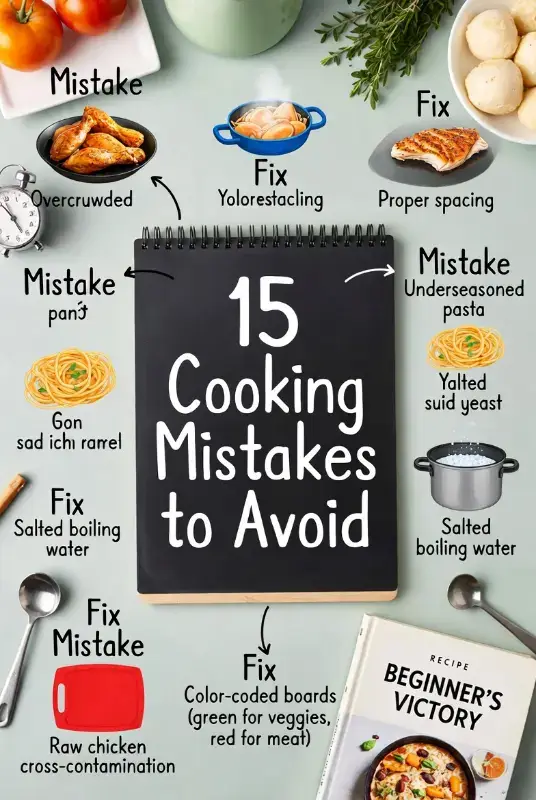
7. Underseasoning or Overseasoning
The Mistake: Either adding too little salt (making food bland) or dumping salt at the end (making it overly salty).
Why It’s Bad: Salt enhances flavor, but it’s easy to go wrong. Underseasoned food is inedible; overseasoned ruins the balance.
How to Fix It:
- Season step-by-step: Add salt early (e.g., to pasta water) and taste as you go.
- Use the “ pinch test”: For sauces, pinch a small amount of seasoning between your fingers—adjust accordingly.
- Remember: Salt is forgiving. You can always add more, but you can’t take it away!
8. Boiling Pasta Without Salt
The Mistake: Boiling pasta in plain water.
Why It’s Bad: Unseasoned pasta water lacks flavor, and the pasta itself tastes like “starchy socks.” Salted water helps pasta cook evenly and enhances texture.
How to Fix It:
- Use 4–6 quarts of water per pound of pasta.
- Add 1–2 tablespoons of salt before you bring the water to a boil.
- Save a cup of pasta water before draining—it’s liquid gold for sauces!
9. Not Letting Meat Rest Before Cutting
The Mistake: Cutting into meat immediately after cooking.
Why It’s Bad: Juices rush out, leaving the meat dry and tough. Resting allows fibers to relax and juices to redistribute.
How to Fix It:
- Rest steak, chicken, or roasts for 5–15 minutes tented with foil.
- For poultry: Let whole chicken rest for 10 minutes before carving.
🔗 Confused about resting times? Serious Eats has a fantastic chart that breaks down resting times for every cut.
10. Cutting Meat Too Soon (or Too Late)
The Mistake: Either cutting meat while it’s still frozen (making it hard to slice) or waiting too long after cooking (over-toughening).
Why It’s Bad: Improper timing leads to uneven cooking, wasted effort, and dry meat.
How to Fix It:
- Thaw meat in the fridge overnight—never at room temperature.
- Cut meat after it’s cooked but before it rests. For example, slice chicken thighs after searing but before resting.
11. Leaving Oil Unattended While Frying
The Mistake: Walking away when frying bacon, chicken, or potatoes.
Why It’s Bad: Unattended oil can overheat, smoke, or catch fire. It’s a major safety hazard!
How to Fix It:
- Stay in the kitchen while anything fries.
- Use a timer to remind yourself.
- If oil smokes: Remove food immediately, lower heat, and ventilate the area.
12. Not Cleaning as You Go
The Mistake: Letting dishes and spills pile up until the end.
Why It’s Bad: You end up with a mountain of cleanup, increasing stress and double work.
How to Fix It:
- Wipe spills immediately.
- Wash utensils after each use.
- Do a quick tidy as you cook—10 minutes of cleanup mid-recipe saves 30 minutes later!
13. Overcooking Starchy Sides (Rice, Potatoes, Pasta)
The Mistake: Leaving rice, potatoes, or pasta in the pot after they’re done.
Why It’s Bad: Excess cooking turns grains mushy and potatoes waterlogged.
How to Fix It:
- Rice: Drain immediately after the timer ends.
- Potatoes: Drain boiled potatoes right away; mash while hot.
- Pasta: Drain al dente—never “overcook” to make it softer.
14. Using the Wrong Cutting Board
The Mistake: Cutting raw chicken on the same board as veggies or fruit.
Why It’s Bad: This spreads harmful bacteria (like Salmonella) and can ruin entire meals.
How to Fix It:
- Use separate boards: One for raw meat, one for produce, one for fruits/desserts.
- Wash thoroughly between uses. Color-coded boards help avoid cross-contamination.
🔗 Want a simple food-safety checklist? The USDA’s food safety guidelines are a free, authoritative resource.
15. Ignoring Kitchen Safety (Knives, Heat, Burns)
The Mistake: Rushing with knives, leaving pots unattended, or touching hot surfaces.
Why It’s Bad: Injuries are common for beginners—and can ruin your cooking day!
How to Fix It:
- Knife safety: Keep knives sharp, use a cutting board, and cut away from your body.
- Use pot holders for hot handles.
- Never leave a pan boiling unattended.
How to Turn These Mistakes Into Mastery
Remember, every mistake is a lesson. Here’s your cheat sheet for success:
- Plan Ahead: Recipe + prep = confidence.
- Measure Accurately: Especially for baking!
- Use the Right Tools: Good pans save your meals.
- Respect Heat: Preheat, don’t overcrowd, stay alert.
- Season Wisely: Taste as you go.
- Rest Meat: Juices = flavor.
- Clean Up: Small steps prevent big messes.
Bonus Tip: Keep a small notebook of “what worked” and “what didn’t.” After a few meals, you’ll build your own foolproof system!
FAQs: Beginner Cooking Questions Answered
1. What’s the #1 mistake beginners make?
Skipping prep work. Without mise en place, you’ll rush, burn food, and feel overwhelmed. Measure, chop, and organize first!
2. How do I avoid burning food on the stove?
Stay in the kitchen! Adjust heat constantly, don’t walk away, and use pans that distribute heat evenly (like stainless steel or cast iron).
3. Can I season food after it’s fully cooked?
For most dishes, yes—but salt should be added during cooking (e.g., pasta water, meat brines). Taste and adjust at the end!
4. Why do recipes say “room temperature” eggs?
Room-temperature eggs blend smoothly into batters, creating better texture and rise in cakes and cookies.
5. How do I know when meat is safe to eat?
Use a food thermometer! Chicken: 165°F, ground beef: 160°F, pork: 160°F. Never rely on color alone.
Ready to Cook with Confidence?
Making mistakes is part of the journey—but now you know exactly what to avoid. The 15 most common cooking mistakes beginners make are all fixable with a little knowledge and practice. Remember, even professional chefs have off days. Your kitchen is a lab, not a test. Experiment, taste, adjust, and most of all—have fun!
Happy cooking!
Pingback: How Can I Reduce Food Waste in My Kitchen-Practical Strategies from a Chef’s Kitchen - KitchenFlavors